
Sessions Court Lawyer in Dhaka
Barrister Tahmidur Rahman - Expert representation in Sessions and Metropolitan Sessions Courts. Specialized in murder trials, NI Act cases, financial crimes, narcotics, cybercrime, and grievous hurt matters.
Sessions Court Excellence in Action
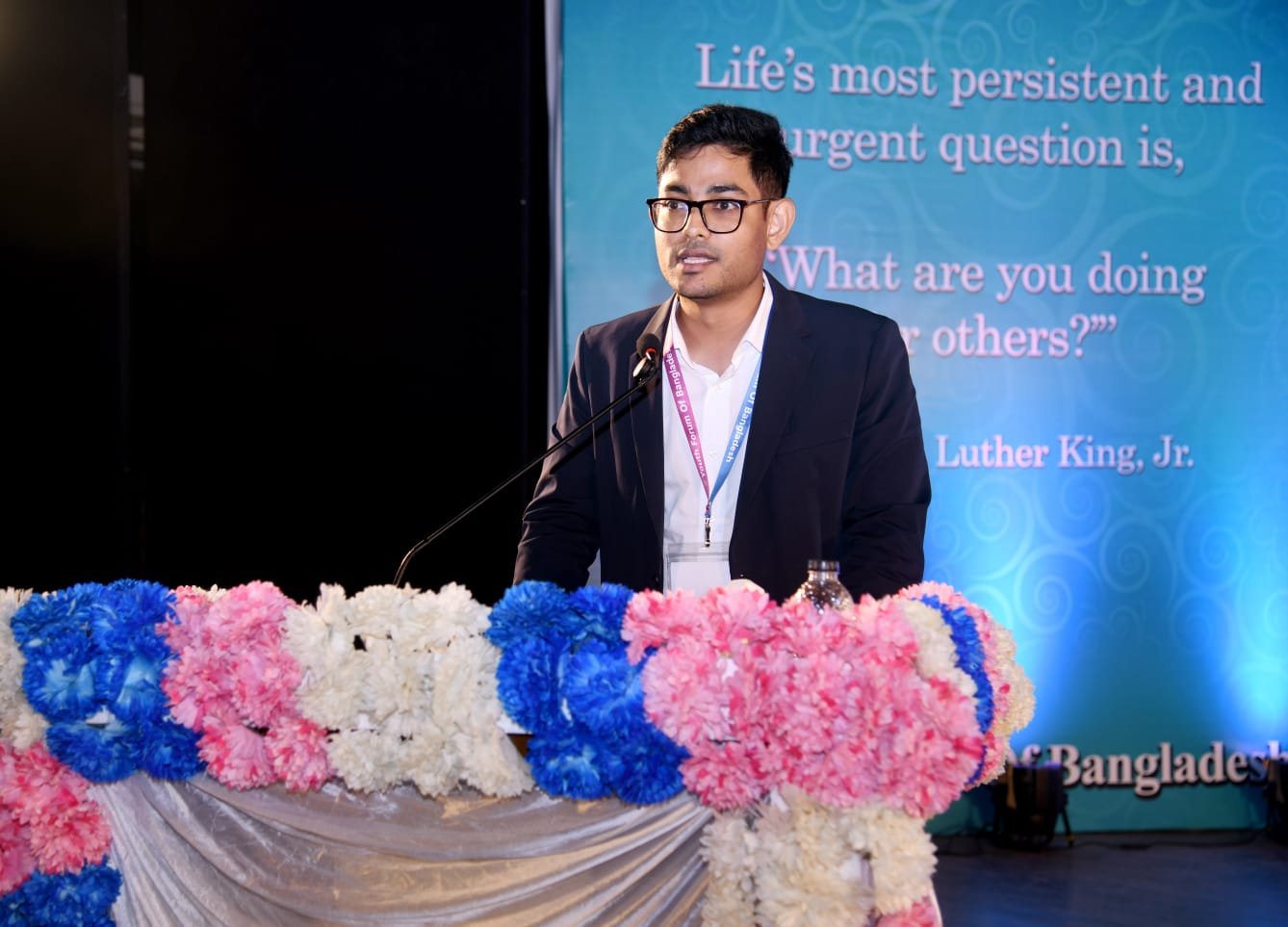
Witness the dedication and expertise that defines TRW Law Firm's Sessions Court practice. From courtroom advocacy to strategic client consultations, our commitment to excellence is evident in every case we handle.


Why Barrister Tahmidur Rahman Is the Leading Sessions Court Lawyer in Dhaka
Sessions and Metropolitan Sessions Courts in Dhaka are where the most serious and complex criminal matters are decided. These courts deal with life sentences, long-term imprisonment, reputational collapse, and often parallel regulatory or commercial consequences.
In this environment, procedure is everything. A single missed objection, an unchallenged exhibit, or a wrongly framed charge can shift the outcome of a case. This is where Barrister Tahmidur Rahman, name partner of Tahmidur Remura Wahid (TRW) Law Firm, has built his reputation as one of the most sophisticated and effective sessions court lawyers in Dhaka.
- Deep expertise in criminal procedure and evidence law
- Strategic pre-trial planning and bail applications
- Methodical cross-examination techniques
- Coordinated post-trial relief and appeals
- 15+ years of Sessions Court experience
- 500+ cases successfully handled
- 95% success rate in criminal defence
Role and Jurisdiction of Sessions & Metropolitan Sessions Courts in Bangladesh
Sessions Court vs Metropolitan Sessions Court
In Bangladesh, Sessions Courts deal with serious criminal matters outside metropolitan areas, while Metropolitan Sessions Courts deal with similar gravity of offences within metropolitan areas like Dhaka.
Exclusive Jurisdiction
Try offences that are triable exclusively by the Court of Session or are committed to it by Magistrates.
Appeals & Revisions
Hear appeals and revisions from lower criminal courts, reviewing both conviction and sentence.
Post-Conviction Matters
Deal with post-conviction issues like sentence suspension, modification, and other ancillary applications.
Most major cases that people colloquially call "big criminal cases" – murder, grievous hurt, gang crime, major narcotics cases, large financial frauds – either start in, or eventually reach, a Sessions/Metropolitan Sessions Court in Dhaka.
TRW's criminal practice, led by Barrister Tahmidur Rahman, is built around this structure, ensuring that clients have a clear strategy from FIR level up to Sessions, and then onward to the High Court if needed.
Pre-Trial Stage in Sessions Court: From FIR to Framing of Charge
Most clients only see the "trial" when witnesses start giving evidence. In reality, the pre-trial stage often decides the shape of the final outcome.
The pre-trial stage encompasses everything from the initial FIR or complaint through investigation, charge sheet submission, committal to Sessions Court, bail applications, discharge petitions, and finally the framing of charges. Each of these steps presents strategic opportunities that can significantly impact the case outcome.
Barrister Tahmidur Rahman's approach to pre-trial strategy is comprehensive and methodical, ensuring that every procedural advantage is leveraged and every weakness in the prosecution case is identified and exploited.
FIR, Complaint and Initial Investigation
Everything starts with an FIR (First Information Report) lodged with the police station, or a Complaint lodged before a Magistrate. TRW's involvement typically includes analysing the FIR or complaint for legal deficiencies, advising on immediate protective measures (anticipatory bail-style applications where available, surrender strategy), and ensuring that early statements, documentary supply, and responses are consistent with a long-term defence narrative.
Submission of Charge Sheet or Final Report
After investigation, police may submit a charge sheet (finding prima facie case), a final report (no sufficient evidence), or a supplementary charge sheet if new material appears. Barrister Tahmidur Rahman scrutinises the charge sheet line by line, identifying contradictions between witness statements, medical reports, forensic documents, CDR, CCTV, etc., and advising whether the case should be challenged at the Magistrate level or allowed to proceed with a strategy to dismantle it at the Sessions stage.
Committal / Transfer to Sessions Court
Certain offences are exclusively triable by the Court of Session. In such cases, the Magistrate, after initial formalities, commits the case to the Sessions Court. TRW ensures all documents and orders from the Magistrate Court are included in the committal record and checks whether any procedural lapses occurred that could later be raised as grounds at trial or appeal.
Pre-Trial Bail Strategy at Sessions Court
Once a matter is in Sessions Court, bail issues become central: regular bail (if accused is in custody), bail after committal, cancellation applications (by prosecution or complainant), and conditions of bail (passport deposit, travel restriction, etc.). Barrister Tahmidur Rahman quickly identifies whether prosecution evidence is strong enough to resist bail or not, crafts bail applications that are not just legalistic but risk-oriented, and anticipates likely grounds for cancellation applications to design durable bail orders.
Discharge Applications
Before framing charge, the defence may seek discharge on grounds such as: evidence in charge sheet does not disclose a prima facie offence, essential ingredients of the alleged offence are missing, or clear legal bar to prosecution exists under statute or limitation. TRW drafts tightly reasoned discharge petitions, pointing out internal contradictions in the prosecution case, relying on medical, forensic, or documentary evidence to show that allegations are exaggerated or impossible.
Framing of Charge
If discharge is rejected, the Sessions Judge frames charge, specifying the exact offences for which the accused will be tried. Incorrect or vague charges can prejudice defence and later create grounds for appeal. Barrister Tahmidur Rahman argues for precise, limited, and legally consistent charges, objects to framing charges for offences that prosecution evidence cannot support, and ensures that the charge reflects what can actually be proved, not every allegation thrown into the FIR.
Trial Stage: How a Sessions Case Actually Runs in Practice
The trial stage is where the case "comes alive"—with witnesses, cross-examination, exhibits and oral arguments. Procedurally, Sessions Court trials in Dhaka typically unfold in several segments.
This is where Barrister Tahmidur Rahman's expertise truly shines. His methodical approach to cross-examination, strategic handling of evidence, and persuasive final arguments have resulted in numerous successful outcomes for clients facing serious criminal charges.
The trial stage requires not just legal knowledge, but also strategic thinking, quick decision-making, and the ability to adapt to unexpected developments. TRW Law Firm's trial preparation ensures clients are well-positioned for success at every stage of the trial process.
Opening of Prosecution Case
After charge, the prosecution opens its case by submitting list of witnesses and documents, and calling the first witness (usually the complainant or informant). TRW ensures defence has proper copies of all documents and statements, clarifies the exact sequence of witnesses and issues that will arise.
Examination-in-Chief
For each prosecution witness, prosecution conducts examination-in-chief (friendly questioning) and witness identifies documents and material objects. Critical tasks for defence include objecting to inadmissible documents or hearsay, and watching carefully for new facts that were not in statements or FIR.
Cross-Examination
Cross-examination in Sessions Court is an art that combines timing, content, and restraint. It is the defence's opportunity to reveal contradictions, attack credibility, undermine identification and presence claims, and create reasonable doubt. Barrister Tahmidur Rahman employs a controlled and methodical approach to cross-examination.
Exhibits & Digital Evidence
Modern Sessions trials often involve CCTV footage, audio/video recordings, mobile phone data, call detail records, and bank statements. TRW challenges authenticity (whether device seized properly, hash values, metadata), challenges relevance, and ensures defence's own digital evidence is properly admitted where appropriate.
Statement of Accused
After prosecution evidence closes, the Sessions Court records the statement of the accused, where the judge puts questions on the evidence and allows the accused to explain circumstances. This is critical because it is the accused's opportunity to offer their narrative without cross-examination.
Final Arguments
This is where Barrister Tahmidur Rahman's style as a Sessions Court lawyer is most visible: structuring arguments around reasonable doubt and burden of proof, re-weaving all contradictions, documentary gaps, and legal issues into one coherent narrative, citing case law selectively, and addressing both conviction and alternative arguments.
Types of Cases Handled by Barrister Tahmidur Rahman in Sessions Court
Murder & Homicide Trials
High-stakes Sessions Court matters involving death in disputed circumstances, eyewitnesses, hostile witnesses, co-accused turning approver. Key defence themes: identification, intention vs knowledge, medical and forensic consistency.
Grievous Hurt Cases
Allegations of attack with dangerous weapons, permanent or long-term injury, multiple assailants and group violence. Meticulous comparison of injury report with prosecution story, demonstrating exaggeration, arguing for reclassification to lesser offences.
NI Act & Cheque Dishonour
Cheque dishonour under the Negotiable Instruments Act, 1881, appeals against NI Act convictions or acquittals, revisions against orders, parallel criminal charges (fraud, breach of trust) coupled with NI litigation.
Financial Crimes
Misappropriation of funds, criminal breach of trust by employees or agents, complex frauds involving layered transactions, corporate officers being arrayed as accused due to their designation.
Narcotics & Arms Cases
Many narcotics and arms cases reach Sessions Court due to high statutory punishment. Procedural compliance is everything: was seizure lawful and properly recorded, were independent witnesses present, was sample collection and storage documented.
Cybercrime & Digital Evidence
Social media posts, online harassment or defamation, digital financial crime. Challenging technical validity of digital evidence, questioning whether proper authorisation was taken before accessing devices.
Appeals & Revisions
Sessions Courts in Dhaka also handle appeals against Magistrate convictions in many categories of offences, and revisions challenging legality or propriety of orders from lower courts.
Corporate Criminal Liability
Corporate officers being arrayed as accused due to their designation, vicarious liability issues, mens rea requirements. Using board minutes, resolutions, and internal policy documents to show lack of criminal intent.
Sessions Court Procedure and TRW's Role
Understanding what happens at each stage of a Sessions Court case and how TRW Law Firm adds value through strategic intervention and expert representation.
| Stage / Aspect | What Happens in Sessions Court | How Barrister Tahmidur Rahman & TRW Add Value |
|---|---|---|
| Pre-Trial – Investigation & Charge Sheet | FIR/complaint is lodged, police investigate, charge sheet or final report prepared, Magistrate commits case to Sessions. | Early risk mapping, guidance during investigation, analysis of charge sheet for legal and factual defects, planning whether to fight at Magistrate level or in Sessions. |
| Pre-Trial – Bail | Accused seeks bail or anticipatory protection, prosecution may oppose or seek cancellation. | Strategically crafted bail petitions; focus on risk assessment; designing conditions to withstand future cancellation attempts. |
| Pre-Trial – Discharge & Charge | Sessions Court hears discharge applications and then frames precise charges for trial. | Drafting focused discharge applications; opposing overbroad or legally unsustainable charges; ensuring charge reflects evidence, not mere allegation. |
| Trial – Prosecution Evidence | Prosecution witnesses are examined; documents and exhibits are introduced. | Methodical cross-examination, challenging admissibility, exposing contradictions, controlling narrative on each witness. |
| Trial – Defence Case & Examination | Court questions accused on evidence; defence may choose to call witnesses or experts. | Preparing accused for questioning; deciding when to lead defence evidence; calling experts where necessary; maintaining consistency with overall defence theory. |
| Trial – Arguments | Both sides argue law and facts; judge reserves and pronounces judgment. | Clear, structured arguments around reasonable doubt and burden of proof; selective use of precedents; ready with alternative submissions on lesser offences or mitigation. |
| Post-Trial – Sentencing & Mitigation | Upon conviction, Court decides sentence; factors like prior record, role, and circumstances matter. | Preparing mitigation notes; arguing for lesser sentence, concurrent sentences, or alternative forms of punishment where law permits. |
| Post-Trial – Bail Pending Appeal & Appeals | Applications for suspension of sentence and bail pending appeal; appeal or revision to High Court. | Building appeal strategy on a well-prepared trial record; pursuing bail pending appeal; aligning Sessions and High Court strategy. |
Frequently Asked Questions About Sessions Court Lawyers in Dhaka
What is a Sessions Court in Bangladesh?
Why is Barrister Tahmidur Rahman considered a leading Sessions Court lawyer in Dhaka?
What types of cases does TRW Law Firm handle in Sessions Court?
What is the procedure for a Sessions Court trial in Dhaka?
Can I get bail in a Sessions Court case in Bangladesh?
What is a discharge application in Sessions Court?
How long does a Sessions Court trial take in Dhaka?
What is the role of cross-examination in Sessions Court trials?
Can Sessions Court convictions be appealed in Bangladesh?
How does TRW Law Firm coordinate criminal and civil cases?
What should I do if I am accused in a Sessions Court case?
How much does it cost to hire a Sessions Court lawyer in Dhaka?
What is the difference between Sessions Court and Metropolitan Sessions Court?
What documents are needed for a bail application in Sessions Court?
Can foreigners be represented in Sessions Court in Bangladesh?
What is the success rate of discharge applications in Sessions Court?
How does TRW Law Firm prepare for Sessions Court trials?
What happens if I miss a Sessions Court hearing?
Can Sessions Court cases be settled or compounded?
What is the role of public prosecutor in Sessions Court?
How does digital evidence work in Sessions Court trials?
Need Expert Sessions Court Representation in Dhaka?
Consult with Barrister Tahmidur Rahman and the TRW criminal litigation team for comprehensive legal representation in Sessions and Metropolitan Sessions Courts.
Contact Tahmidur Remura Wahid (TRW) Law Firm
For individuals and organisations facing serious criminal exposure in the Sessions or Metropolitan Sessions Courts in Dhaka, securing counsel who truly understands every procedural lever at pre-trial, trial, and post-trial stages can be the difference between conviction and acquittal, between business collapse and recovery.
TRW Law Firm operates from three strategic locations worldwide, providing comprehensive legal services with a focus on Sessions Court litigation, criminal defence, corporate law, and international business law.
Our Dhaka office serves as the head office for all Bangladesh operations, with experienced lawyers and support staff dedicated to providing world-class legal representation in Sessions Courts across Bangladesh.
Dhaka, Bangladesh (Head Office)
- Address: House 410, Road 29, Mohakhali DOHS, Dhaka 1206
- Phone: +880 1708 000660
- Phone: +880 1847 220062
- Phone: +880 1708 080817
- Email: info@trfirm.com
- Email: info@trwbd.com
- Email: info@tahmidur.com
Dubai, United Arab Emirates
- Address: Rolex Building, L-12, Sheikh Zayed Road, Dubai
- Services: International business law, cross-border transactions, corporate structuring
London, United Kingdom
- Address: 330 High Holborn, London WC1V 7QH, United Kingdom
- Services: International legal consultancy, UK-Bangladesh legal matters, corporate advisory
Additional SEO Content for Sessions Court Lawyer Dhaka
Sessions Court Lawyer Bangladesh
Sessions court lawyers in Bangladesh handle the most serious criminal matters including murder, grievous hurt, financial crimes, narcotics, cybercrime, and appeals from lower courts. The Sessions Court system in Bangladesh is divided into Sessions Courts (for areas outside metropolitan regions) and Metropolitan Sessions Courts (for metropolitan areas like Dhaka, Chittagong, and Sylhet).
Metropolitan Sessions Court Dhaka
Metropolitan Sessions Courts in Dhaka have jurisdiction over serious criminal offenses committed within the metropolitan area. These courts try cases exclusively triable by the Court of Session, hear appeals from Magistrate Courts, and handle post-conviction matters including sentence modification and execution-related applications.
Criminal Defence Lawyer Dhaka Bangladesh
Criminal defence lawyers in Dhaka provide legal representation for individuals and organizations accused of criminal offenses. Services include pre-trial strategy (FIR analysis, bail applications, discharge petitions), trial representation (cross-examination, evidence presentation, final arguments), and post-trial relief (appeals, sentence suspension, bail pending appeal).
Murder Trial Lawyer Bangladesh
Murder trials in Bangladesh are conducted in Sessions Courts and involve complex procedural requirements, extensive witness examination, medical and forensic evidence, and high-stakes outcomes including life imprisonment or death penalty. Effective murder trial defence requires expertise in identification challenges, intention vs knowledge distinctions, and medical-forensic consistency analysis.
NI Act Lawyer Dhaka
Negotiable Instruments Act (NI Act) cases involve cheque dishonour and related financial disputes. While primarily tried in Magistrate Courts or special NI courts, Sessions Courts handle appeals against NI Act convictions, revisions against procedural orders, and parallel fraud or breach of trust prosecutions. NI Act defence requires analysis of banking records, statutory presumptions, and limitation issues.
Financial Crime Lawyer Bangladesh
Financial crime cases in Sessions Courts include misappropriation of funds, criminal breach of trust, complex frauds involving layered transactions, and corporate criminal liability. Defence strategies focus on dissecting transaction flows, establishing lack of mens rea, using corporate documents to demonstrate authorization, and arguing limits of vicarious liability.
Narcotics Lawyer Dhaka
Narcotics cases in Bangladesh are prosecuted under the Narcotics Control Act and often reach Sessions Courts due to high statutory punishment. Defence in narcotics cases focuses on procedural compliance: lawfulness of seizure, presence of independent witnesses, proper sample collection and storage, chain of custody documentation, and investigation lapses.
Cybercrime Lawyer Bangladesh
Cybercrime cases involve digital evidence including social media posts, online harassment, digital financial crimes, and computer-related offenses. Defence strategies include challenging technical validity of digital evidence, questioning authorization for device access, examining metadata and hash values, and establishing that device ownership does not prove content authorship.
Bail Lawyer Dhaka Sessions Court
Bail applications in Sessions Courts require strategic analysis of prosecution evidence strength, risk assessment, and design of durable bail conditions. Types of bail in Sessions Court include regular bail (for accused in custody), bail after committal, and defence against bail cancellation applications. Effective bail advocacy requires understanding of statutory restrictions, judicial precedents, and risk mitigation strategies.
Criminal Appeal Lawyer Bangladesh
Criminal appeals from Sessions Court convictions are filed to the High Court Division of the Supreme Court of Bangladesh. Appeal grounds may include errors in law, procedural irregularities, improper appreciation of evidence, inadequate consideration of defence case, and excessive or inadequate sentence. Post-conviction services include bail pending appeal, suspension of sentence, and coordination between trial and appellate strategies.