
Understanding the Difference Between H-1B and L-1 Visas from Bangladesh: A TRW Law Firm Guide
In the globalized world of employment and talent migration, U.S. visa categories such as the H-1B and L-1 visas are among the most commonly sought options by professionals and companies in Bangladesh. At TRW Law Firm, we frequently advise corporations, executives, and skilled professionals navigating U.S. immigration procedures on the nuances of each visa type. Despite appearing similar at first glance—both allowing foreign nationals to work in the United States—the H-1B and L-1 visas serve distinct purposes and have key differences in eligibility, requirements, and flexibility.
In this article, we present a comprehensive guide tailored for Bangladeshi applicants and employers, outlining the core differences between the H-1B and L-1 visas, their respective requirements, benefits, and strategic use cases.
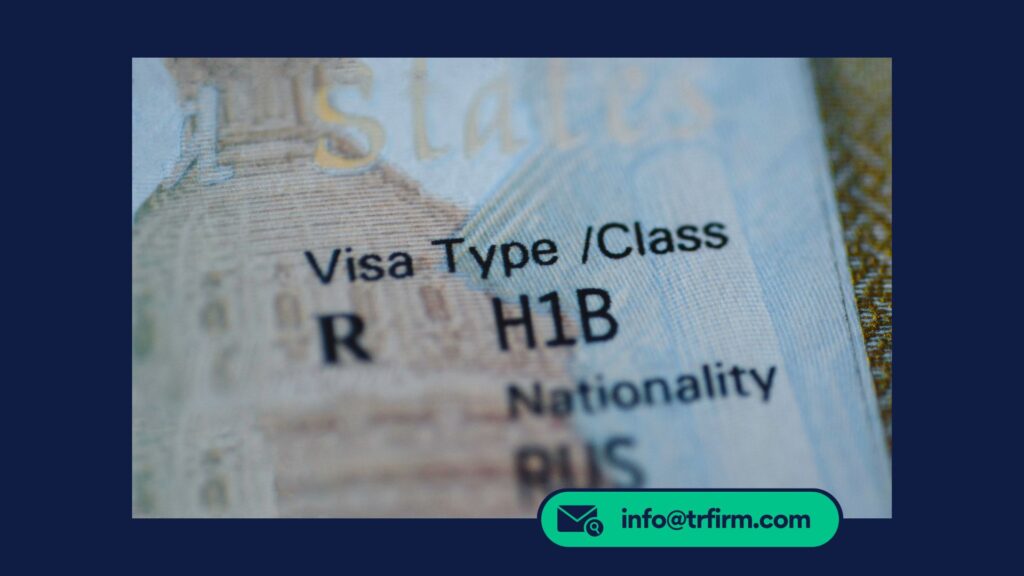
Overview of the H-1B and L-1 Visas
| Feature | H-1B Visa | L-1 Visa |
|---|---|---|
| Purpose | Employing foreign professionals in specialty occupations | Transferring foreign employees to a U.S. office of the same company |
| Employer Sponsorship | Required from a U.S.-based company | Required from a multinational company with offices in both the U.S. and abroad |
| Employee Requirements | Bachelor’s degree or higher in a specialized field | At least 1 year of work with foreign company in the last 3 years |
| Work Flexibility | Can change employers with new petition | Restricted to the sponsoring employer |
| Initial Duration | Up to 3 years | Up to 3 years (L-1A) or 1 year (new office), extendable |
| Maximum Stay | 6 years | 7 years (L-1A) or 5 years (L-1B) |
| Cap/Quota | Subject to annual quota (85,000) | No cap |
| Path to Green Card | Available | Available and often easier for L-1A |
| Dependents | H-4 visa, limited work rights | L-2 visa, eligible for work authorization |
What is the H-1B Visa?
The H-1B visa is designed for foreign professionals working in specialty occupations, including but not limited to IT, finance, engineering, architecture, and healthcare. A U.S. employer must sponsor the applicant by filing a petition with the U.S. Citizenship and Immigration Services (USCIS).
✅ Key Requirements:
- The position must require at least a bachelor’s degree or equivalent.
- The applicant must possess the required educational qualifications.
- The employer must pay the prevailing wage for the position in the geographic area.
- The role must align with a specialty occupation as defined by USCIS.
🔄 Job Flexibility:
H-1B visa holders can change employers by having a new employer file a petition on their behalf—a process known as H-1B portability.
🧮 Cap Restrictions:
- 65,000 regular cap + 20,000 cap for U.S. master’s degree holders
- Petitions usually open in April with a start date in October
- Lottery system due to high demand
⏳ Duration:
- Initial stay: 3 years
- Extensions: Up to a maximum of 6 years
- H-1B holders can pursue a Green Card while on H-1B (dual intent allowed)
What is the L-1 Visa?
The L-1 visa enables multinational companies to transfer employees from their foreign offices to a related U.S. office. It is ideal for companies establishing U.S. operations or expanding their global workforce.
There are two main types:
- L-1A: For executives and managers
- L-1B: For employees with specialized knowledge
✅ Key Requirements:
- Applicant must have worked at least one year (within the last 3 years) for the foreign company.
- There must be a qualifying relationship between the U.S. and foreign entities (parent, subsidiary, affiliate).
- The applicant must be transferred to a similar or related role.
🚫 Limited Flexibility:
L-1 visa holders cannot switch employers. The visa is tied to the sponsoring employer and role.
⏳ Duration:
- L-1A: Initial stay of 1 or 3 years, extendable up to 7 years
- L-1B: Initial stay of 1 or 3 years, extendable up to 5 years
- New office L-1A: Limited to 1 year initially
🌱 Green Card Pathway:
L-1A visa holders enjoy a smoother transition to a Green Card via the EB-1C category, which does not require a PERM labor certification.
Key Differences Between H-1B and L-1 Visas for Bangladeshi Professionals
🔹 Sponsorship Source:
- H-1B: A U.S. company sponsors the worker directly for a job in the U.S.
- L-1: A Bangladeshi company with a U.S. presence can transfer the employee internally.
🔹 Quota System:
- H-1B visas are subject to an annual numerical cap and require participation in a lottery system.
- L-1 visas are not capped, making them more predictable and accessible for qualifying firms.
🔹 Job Mobility:
- H-1B allows changing employers (with new petition).
- L-1 does not allow job changes outside the parent/affiliate structure.
🔹 Time with Employer:
- H-1B applicants need no prior relationship with the employer.
- L-1 applicants must have at least 1 year of prior employment with the foreign entity.
🔹 Dual Intent and Green Card Path:
- Both allow dual intent (you can apply for a Green Card).
- L-1A often leads to a faster EB-1C Green Card path.
Strategic Considerations for Bangladeshi Companies and Professionals
For Bangladeshi Professionals:
- H-1B may be suitable if you're a skilled worker with a job offer from a U.S. company and wish to have employer mobility.
- L-1 is ideal if you’re currently working for a multinational with a U.S. office and are being internally transferred.
For Bangladeshi Businesses:
- Use the L-1 visa to establish or expand operations in the U.S. by sending senior staff or specialists.
- Utilize L-1A to bring in executives to build or scale U.S. teams, while offering them a path to permanent residency.
Common Scenarios from Bangladesh
🔸 H-1B Example:
A Bangladeshi software engineer gets a job offer from a tech company in California. The employer files an H-1B petition during the lottery season. Upon selection and approval, the engineer relocates to the U.S. under H-1B status and can later switch to another employer if desired.
🔸 L-1 Example:
A senior finance manager at a Dhaka-based multinational is selected to head operations in the New York office. After completing one year in the Dhaka office, the company files an L-1A visa petition, and the manager is relocated to oversee the U.S. division.
Compliance and Documentation
H-1B Visa:
- Labor Condition Application (LCA) from U.S. Department of Labor
- Detailed job description, degree proof, employer documentation
L-1 Visa:
- Proof of qualifying relationship between companies
- Employee’s work history, organization charts, and business plans for new offices
How TRW Law Firm Can Help
At TRW Law Firm, we offer holistic support for individuals and companies in Bangladesh navigating the U.S. immigration landscape. Whether you're an IT professional exploring the H-1B route or a company planning to expand to the United States via the L-1 visa, our expert attorneys provide:
End-to-end visa filing and documentation
Strategic advice on choosing the right visa path
Business structuring for L-1 new office eligibility
Immigration compliance and Green Card planning
Interview and consulate preparation
We understand the challenges Bangladeshi clients face when entering the U.S. employment market and ensure a personalized, strategic approach for every visa journey.
Conclusion
Both the H-1B and L-1 visas serve as valuable tools for professionals and businesses in Bangladesh aiming to establish a foothold in the United States. The key lies in understanding their differences and aligning your immigration strategy with your career goals or corporate objectives. While the H-1B offers flexibility and broader job market access, the L-1 provides a streamlined path for internal transfers and long-term residency.
Let TRW Law Firm be your trusted partner in choosing the right path forward.
Contact TRW Law Firm
For tailored visa solutions and U.S. immigration guidance, contact us today.
📍 Head Office:
TRW Law Firm
House 410, Road 29, Mohakhali DOHS, Dhaka
📞 +8801708000660 | +8801847220062 | +8801708080817
📧 info@trfirm.com | info@trwbd.com | info@tahmidur.com
🌐 www.tahmidurrahman.com
Summary Table: H-1B vs. L-1 Visa
| Category | H-1B Visa | L-1 Visa |
|---|---|---|
| Purpose | Skilled professionals in specialty occupations | Intracompany transferees |
| Cap | Yes, 85,000 annual cap | No cap |
| Employer | U.S.-based | Multinational (U.S. + abroad) |
| Prior Employment | Not required | 1 year at foreign office |
| Duration | Up to 6 years | Up to 7 years (L-1A), 5 years (L-1B) |
| Job Flexibility | Can change employer | Restricted to sponsor |
| Green Card Path | Permitted (PERM usually needed) | Easier path for L-1A via EB-1C |
| Dependents | H-4 (limited work rights) | L-2 (can apply for work permit) |
