
International Arbitration at TRW Law Firm (Commercial • Investor-State • State-to-State • Emergency Relief • Global Enforcement)
Arbitration is not only a forum choice—it is a revenue protection system for businesses that operate across borders. At TRW, our arbitration practitioners cover the full lifecycle of disputes: contract design and treaty planning, emergency relief, complex merits hearings, damages modelling, post-award enforcement, and settlement engineering. Our team spans Dhaka, Dubai, and London, with matter experience and co-counsel collaboration across Europe, the Americas, Africa, and Asia Pacific. We act under both civil and common law traditions and public international law, and we conduct arbitrations in multiple languages.
What sets TRW apart is simple:
- We conduct our own advocacy. Your advocates shape strategy from day one, eliminating the cost and delay of outsourcing the core voice of your case.
- We match legal firepower with sector depth. Energy & infrastructure, commodities & trade, financial services and funds, telecom/tech and platforms, life sciences & healthcare, aviation & logistics, construction & real estate—our trial strategy is built around how value is created and where it is stored.
- We enforce globally. A favourable award must convert to cash, security, or leverage. Our coordinated Dhaka–Dubai–London platform targets receivables, bank flows, and attachable assets with speed and discipline.
You can contact our cross-border disputes team here: Contact TRW Law Firm.
Our Global Arbitration Footprint
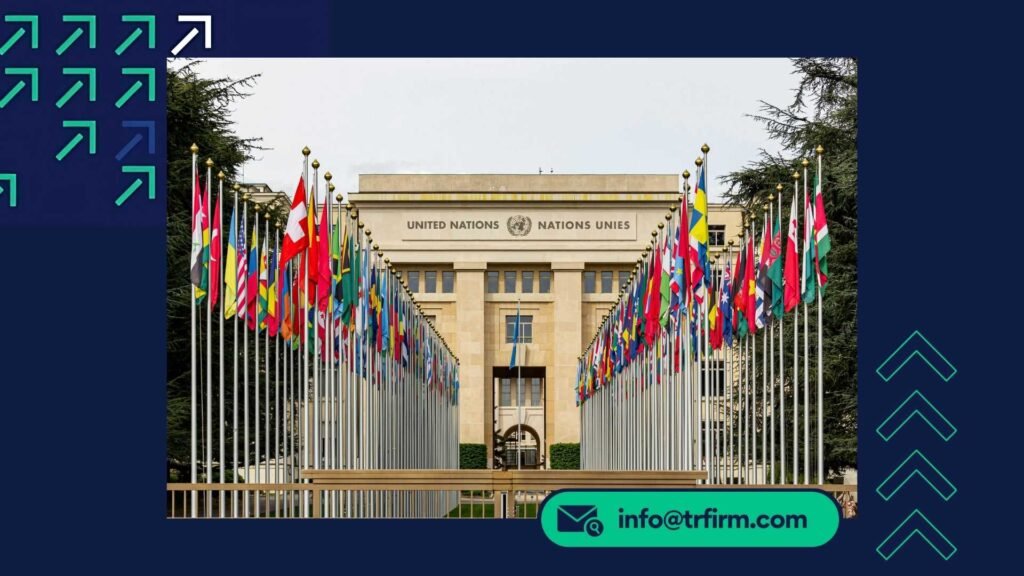
Geographic coverage
- Europe & UK (London hub): English-law governed contracts, London-seated arbitrations, Commercial Court interface, third-party disclosure, and award recognition and execution.
- Middle East (Dubai hub): UAE-seated arbitrations and award enforcement; coordination with DIFC/ADGM where appropriate; strategic garnishment against MENA receivables and logistics corridors.
- Asia & Bangladesh (Dhaka core): South Asian disputes, Bangladesh-seated arbitrations, court support (interim relief, recognition, and execution), and regulatory alignment for repatriation of proceeds.
- Africa & the Americas: Co-counsel collaborations, institutional and ad hoc proceedings, evidence management, and multi-forum enforcement in commodity, energy, and infrastructure disputes.
Institutional and ad hoc rules
We have acted under the ICC, LCIA, SIAC, HKIAC, SCC, UNCITRAL, and other institutional rules; in investor-state contexts we prosecute and defend under ICSID and UNCITRAL frameworks. We also steer ad hoc arbitrations where parties require bespoke procedures, lower direct institutional fees, or tailored confidentiality.
Legal traditions and languages
We operate across common law and civil law systems and plead in multiple languages. Our lawyers align pleadings and evidence strategy to the tribunal’s tradition—streamlined, issue-driven presentations for common law tribunals; code-anchored, principles-focused analyses for civil law panels—without sacrificing cross-examination potency or damages rigour.
Advocacy First: Why TRW Pleads Your Case Ourselves
At TRW, advocacy is not an add-on—it is central. Conducting our own advocacy delivers four client-critical advantages:
- Strategy continuity. The same advocates who crafted the case theory examine witnesses and address the tribunal, ensuring coherence from document discovery through submissions and hearing.
- Cost efficiency. By removing layered outside counsel, clients avoid duplication, re-briefing, and tactical drift.
- Speed. Rapid iteration on new facts and tribunal directions—no third-party bottleneck.
- Credibility with the tribunal. A single, accountable voice is harder to deflect and easier to believe.
We also integrate quant, valuation, and sector experts into the advocacy spine so that fact, law, and damages tell a single story.
Arbitrator and Expert Selection: The Hidden Decider
Tribunals and experts shape outcomes as much as the law. Members of our arbitration group regularly sit as arbitrators, giving us a second-chair vantage point on deliberative dynamics: what persuades, what annoys, where procedural fairness lines actually sit, and how credibility is really weighed. We help clients:
- Identify arbitrators who are neutral yet pragmatic, with the right industry sensibility.
- Balance the panel: chair, co-arbitrators, and appointing authority pathways.
- Vet experts for methodological integrity and hearing stamina—not just CV prestige.
This vantage helps us design winning strategies: how to frame jurisdictional issues, when to bifurcate, what to concede, what to hammer, and how to present complex quantum in a manner that invites adoption, not resistance.
Investor-State and State-to-State: Treaty Protection and Public Law Insight
When counterparty risk is sovereign or quasi-sovereign, stakes rise. We advise on investment structuring to capture treaty protection (national treatment, MFN, FET, expropriation, full protection and security), navigating consent to arbitration, fork-in-the-road, jurisdictional objections, and sovereign immunity boundaries. We regularly liaise with government counsel, policy agencies, and state entities to:
- Advise on treaty planning for inbound investments and post-dispute restructuring (where appropriate and permissible).
- Run investor-state claims or defences with sensitivity to policy optics, development finance partners, and the commercial-use doctrine for execution.
- Construct settlement architecture that aligns with budgetary cycles, project finance covenants, and public procurement frameworks.
Our team’s public international law experience means we can manage state-to-state matters where disputes implicate border infrastructure, energy corridors, air services, fisheries, space/telecom, or treaty interpretation.
Sector Strengths (How We Turn Industry Knowledge into Tribunal Wins)
Energy & Infrastructure (EPC/EPCM, IPP/IPP-like offtakes, pipelines, LNG, refineries, renewables):
We deal with EPC delay/defect claims, change orders, downstream shutdown loss, liquidated damages vs. penalty arguments, force majeure vs. hardship, and complex expert battles on critical path, productivity, and cost escalation. We also handle unitisation and cross-border field development controversies, offtake payment defaults, and tariff/curtailment disputes.
Financial Institutions & Funds:
Share purchase disputes, post-M&A warranty and indemnity, misrepresentation and negligent misstatement, NAV and liquidity covenants, GP/LP issues, prime brokerage collateral, derivatives margin and CSA disputes, and structured credit fallouts. We understand how ISDA/CSA, netting, and valuation feeds translate into arbitral narratives that tribunals accept.
Telecom, Tech & Platforms:
Licensing, software and ticketing platforms, advertising and payments flows, data processing undertakings, service-credit regimes, and force majeure under public health events. We litigate source code escrow triggers, SLAs, and cross-border data disclosure consistent with local law.
Life Sciences & Healthcare:
Co-promotion, manufacturing and supply, quality failures, regulatory change risk allocation, milestone and royalty accounting, and exclusivity. We design expert evidence that meshes GxP, pharmacovigilance, and contract economics.
Aviation & Logistics:
Aircraft supply, engines and MRO, ground handling, slot allocation disputes, and ticketing systems. We weave operational realities into damages models tribunals can trust.
Commodities & Trade:
L/C mechanics, force majeure in logistics shocks, demurrage and detention, quality/quantity disputes, and title/price escalators. Execution usually aims at receivables and correspondent banks in friendly hubs.
Construction & Real Estate:
Cost overruns, design responsibility, latent defects, payment milestones, and completion vs. taking-over certification battles. We unify delay, defects, and quantum into a consistent theory.
Enforcement: From Paper to Payment (Dhaka–Dubai–London)
A victory memo is meaningless unless it turns into money or security. TRW treats enforcement as Phase Two of every arbitration, planning it from day one. Our approach:
- Asset-first mapping. We maintain a living map of bank accounts, receivables, shareholdings, real assets, escrow arrangements, and correspondent banking rails.
- Multi-forum filings. Recognition where assets live (Bangladesh) and where payment pipes run (often Dubai or London).
- Third-party pressure. Garnishments and disclosure aimed at payors, banks, and platforms, not just the debtor.
- Sovereign playbook. Target commercial-use assets; design consent orders around revenue escrow and development funding windows.
- Repatriation and compliance. Coordinate with banking and regulatory teams so recoveries move lawfully and fast.
For an enforcement consultation or to pre-wire your contracts for enforcement success, speak to us here: Contact TRW Law Firm.
Experience Highlights (Anonymised Illustrations)
Below are anonymised summaries reflecting the scale and complexity of mandates our practitioners have handled across institutions and regions. Client confidentiality, privilege, and market sensitivity prevent disclosure of names; where helpful, we describe forum/rules, sector, and strategic outcomes. In line with TRW style, we avoid specific personal names and keep focus on industry and legal issues.
Financial & Funds
- Asian financial institution (UNCITRAL; Hong Kong law): counsel on investment disputes arising out of a fund platform; parallel strategies to safeguard collateral and structure settlement exit options while preserving regulatory compliance.
- PE exit dispute (ICC; Hong Kong): defended a multi-jurisdictional claim (fraud, negligent misstatement, warranty breach) linked to the sale of an insurance company; integrated forensic accounting with regulatory materiality arguments to reduce exposure and secure a commercial resolution.
Energy & Natural Resources
- West African field development (UNCITRAL + parallel litigation): advised two energy majors on unitisation issues between adjacent blocks; succeeded in impugning ministerial decisions as ultra vires, unlocking development options and resetting the negotiating table.
- Qatar mega-project (ICC): advised a tier-one EPC contractor in pipeline infrastructure claims exceeding USD 10 billion; secured favourable settlement terms after a sequence of procedural wins and targeted expert examinations.
- Southeast Asia refinery/petrochem (SIAC + emergency arbitration): represented an international project company in multi-billion claims on EPC performance and change orders; obtained emergency relief and complementary court injunctions to preserve status quo and cash flows.
- Central Asian oil field exit (ICSID): advised a sovereign counterparty and national oil company on investor claims under a BIT and the ECT; jurisdictional and merits strategy framed around contractual withdrawal rights and state regulatory powers.
Aviation, Tech, and Life Sciences
- Airline services platform: handled claims involving force majeure from pandemic conditions under a comprehensive passenger/ticketing and software suite, aligning service credits with practical resumption trajectories.
- Covid-19 vaccine supply: advised a biotechnology innovator in high-stakes manufacturing and supply disputes, integrating GxP evidence with accelerated interim measures to keep production on track.
- Pharma co-promotion (ICC; Singapore): secured favourable award in a dispute exceeding USD 500 million; tribunal accepted our causation and royalty accounting narrative.
Public Sector & Infrastructure
- Airport redevelopment (SIAC): defended a Southeast Asian government agency against contractor claims arising out of scope variance and disruption; achieved major reductions by tying the delay chain to contractor-controlled drivers.
- Policy-sensitive disputes: advised on concessions and tariff structures where state policy evolution created pressure on returns; designed settlement frameworks with regulatory guardrails.
These illustrations reflect the scale of the disputes, the forums we operate in, and our toolkit across emergency measures, heavy merits hearings, and post-award execution.
How We Build Winning Cases
- Jurisdictional clarity. We prosecute and defend jurisdiction with a document-tight record (consent, authority, seat, scope, multi-party reach).
- Evidence architecture. From day one we design a source-of-truth data room: contracts, board approvals, project records, emails, operational logs, financial models, and expert workpapers.
- Damages that persuade. Experts must be rigorous but also explainable; our quant narratives are built to be adopted, not resisted—linking method, inputs, and business reality.
- Procedural strategy. We use bifurcation where it helps, push or resist consolidation depending on risk, and build hearing timetables that leave opponents over-extended.
- Hearing excellence. Focused cross-examination, visualisation of complex facts, and disciplined time management.
- Post-award clarity. Draft enforcement-ready awards with relief that is executable: money sums, interest mechanics, declarations that unlock third-party leverage.
Choosing TRW: What Clients Tell Us Matters
- One team from theory to treasury. We don’t stop at the award; we plan enforcement from the start and we staff finance/regulatory lawyers to move money compliantly.
- Sector-mature advocacy. Tribunals feel when counsel understands the industry. We don’t learn your business on your time.
- Regional sensitivity. Cross-border cases turn on cultural, governmental, and market context. Our Dhaka–Dubai–London triangle gives us the on-the-ground instincts that documents do not show.
- Cost discipline. We phase budgets to case gates and offer aligned fee models for appropriate mandates.
- Settlement intelligence. Many victories are negotiated. We build leverage, then structure solutions: escrow, consent orders, security replacement, step-in rights, and default accelerators.
Bangladesh Core, with London and Dubai Multipliers
Bangladesh:
We manage Bangladesh-seated arbitrations, court assistance (including interim measures), and award recognition/execution. We know how to persuade local courts with indexed, gap-free evidence, handle translations and certifications precisely, and direct execution at bank accounts, receivables, L/C proceeds, and shareholdings. For SOE or agency disputes, we separate sovereign from commercial-use assets to keep the enforcement path credible.
London (UK):
London provides world-class tribunals and a robust toolbox for award recognition, third-party debt orders, charging orders, information orders, and officer examinations. It is also a global banking and receivables nexus. We use London to generate disclosure leverage and to intercept payment flows when counterparties operate in sterling or clear through UK institutions.
Dubai (UAE):
The UAE is a strategic centre for trade, energy, and logistics. When counterparties or their payors are in the Gulf, we often file for recognition and garnishment in the UAE to reach regional receivables or bank positions. Where conditions align, we may leverage DIFC or ADGM court support to convert awards into executable pressure, coordinating with local counsel as needed.
This tri-hub approach compresses timelines and raises the settlement probability without sacrificing merits position.
Working with Local Counsel Worldwide
International arbitration often requires local procedural moves: injunctions, protective filings, notary or registry steps, and asset filings. We partner seamlessly with leading local counsel in the Americas, Europe, Africa, and Asia Pacific. Our role is to own the strategy and advocacy while coordinating local action so the case remains one story, not fragmented chapters.
Risk Management and Ethics
We enforce hard, but we enforce clean:
- Sanctions, AML/CFT, and KYC built into counterpart and third-party analysis.
- Anti-corruption zero tolerance. We refuse intermediaries or tactics that create FCPA/UKBA risk.
- Data hygiene. Evidence collection respects privacy and confidentiality laws; court-ordered disclosure frames are used where required.
- ESG awareness. In sovereign-adjacent disputes we consider development objectives and reputational context so that outcomes are durable, not pyrrhic.
Client Profiles We Serve
- Financial institutions and funds navigating post-M&A, derivatives, and asset recovery disputes.
- Multinationals in energy, infrastructure, technology, life sciences, consumer, and industrials.
- Governments and SOEs managing treaty exposure, concession dynamics, and complex projects.
- Growth companies scaling across borders, where platform agreements and IP drive enterprise value.
- DFIs and export credit agencies seeking enforceable, policy-consistent solutions.
Whatever your profile, we combine sector knowledge with track-record advocacy and global enforcement to protect value.
Engagement Models and Costing
We build transparent fee plans:
- Phased budgets aligned to case gates (jurisdiction, liability, damages, hearing, post-award).
- Hybrid or success-aligned models for appropriate commercial cases.
- Cost exposure mapping so management and boards can make informed decisions.
- Early dispute assessment (EDA) within 2–4 weeks to provide scenario trees, expected value, and enforcement options—before you commit to a long campaign.
Getting Started: TRW’s Dispute Readiness Kit
If you anticipate cross-border exposure in the next 6–12 months, a short readiness exercise saves time and cost:
- Contract and treaty scan. Seats, rules, governing law, joinder/consolidation, interim relief, expert determination vs. arbitration hand-offs, and escalation clauses.
- Evidence preservation. Litigation hold instructions, custodians, data map, archive access, and third-party data sources.
- Damages blueprint. Data sources for revenue, cost, and project controls; early model scaffolding; identify value drivers.
- Enforcement pre-wiring. Payment architecture through attachable banks; affiliate guarantees; security that is execution-ready.
- Communications planning. Stakeholder scripts to support settlement and avoid reputational missteps.
Speak with us to deploy the kit or to tailor it to a live project: Contact TRW Law Firm.
Frequently Asked Questions
Do tribunals revisit national policy choices?
In commercial arbitration, tribunals apply the contract and governing law; in investor-state cases they apply treaty standards. Tribunals do not manage policy—they test state measures against legal thresholds (e.g., FET, expropriation, proportionality).
Can we arbitrate under multiple languages?
Yes; we structure bilingual proceedings where needed and ensure translations are authoritative and consistent, especially for technical exhibits.
How fast can we get interim relief?
Emergency arbitrators can be appointed within days under major rules. Courts at the seat or in enforcement forums may also grant urgent measures if the contract preserves that route.
Is settlement a sign of weakness?
No. The best settlements occur after you’ve created executable pressure—secured recognition, targeted receivables, or obtained a freezing order. We design settlements with escrow, security replacement, and default accelerators to make peace work.
How do we handle state immunity at enforcement?
We target commercial-use assets; where possible we secure waivers in contract formation. We also use structures (revenue escrows, payor notices) that avoid sovereign property entirely.
What if the counterparty starts a set-aside at the seat?
We oppose stays or condition them on substantial security. In many jurisdictions, recognition can proceed in parallel.
Summary Table — TRW International Arbitration at a Glance
| Pillar | What We Do | Why It Matters | TRW Advantage | Typical Outputs |
|---|---|---|---|---|
| Strategy & Advocacy | Case theory, pleadings, cross-examination, oral advocacy | Coherent, efficient case from start to finish | We advocate ourselves; no hand-offs | Memorials, skeletons, hearing bundles |
| Institutions & Forums | ICC, LCIA, SIAC, HKIAC, SCC, UNCITRAL, ICSID; ad hoc | Fit-for-purpose procedures and enforceable outcomes | Multi-rules fluency; seat selection advice | Procedural maps; timetable control |
| Investor-State & Public Intl. Law | Treaty planning, jurisdiction, merits, damages, compliance | Protects capital in sovereign contexts | Policy-sensitive advocacy; immunity savvy | Notif./SoC/SoD; quantum models; award |
| Sector Expertise | Energy, infra, finance, tech, life sciences, aviation, trade | Tribunals trust industry-literate counsel | Experts integrated into the spine | Expert reports; demonstratives |
| Emergency Relief | Freezing orders, emergency arbitrator, injunctions | Preserve assets, stop dissipation | Rapid filings; parallel court support | Orders; undertakings; escrow |
| Evidence & Damages | Data rooms, disclosure strategy, valuation | Makes the case adoptable by tribunal | Integrated fact-law-quant story | Witness/expert reports; models |
| Enforcement | Recognition, garnishment, charging orders, receivable interception | Converts award to money/security | Dhaka–Dubai–London orchestration | Orders, seizures, settlements |
| Sovereign/ SOE Pathway | Commercial-use targeting, consent orders, escrow | Avoids immunity traps; durable solutions | Governmental sensitivity; DFIs aware | Structured settlements |
| Settlement Engineering | Consent orders, security replacement, step-in rights | Ends disputes decisively | Leverage backed by execution | Settlement deeds; monitored plans |
Connect with TRW’s Global Arbitration Team
Tahmidur Remura Wahid (TRW) Law Firm
Dhaka • Dubai • London • and allied counsel worldwide
Contact Numbers
+8801708000660
+8801847220062
+8801708080817
Emails
info@trfirm.com
info@trwbd.com
info@tahmidur.com
Global Law Firm Locations
- Dhaka: House 410, Road 29, Mohakhali DOHS
- Dubai: Rolex Building, L-12 Sheikh Zayed Road
- London (UK): 330 High Holborn, London WC1V 7QH, United Kingdom
Start a conversation: Contact TRW Law Firm
This page is prepared for international clients, in-house counsel, governments and SOEs seeking arbitration counsel with advocacy strength, sector maturity, and global enforcement capability. Internal links only have been used to maintain site integrity and user experience.
