International Arbitration in the Netherlands (2025 Guide for Foreign Companies)
Prepared by Tahmidur Remura Wahid (TRW) Law Firm — Dhaka • Dubai • London
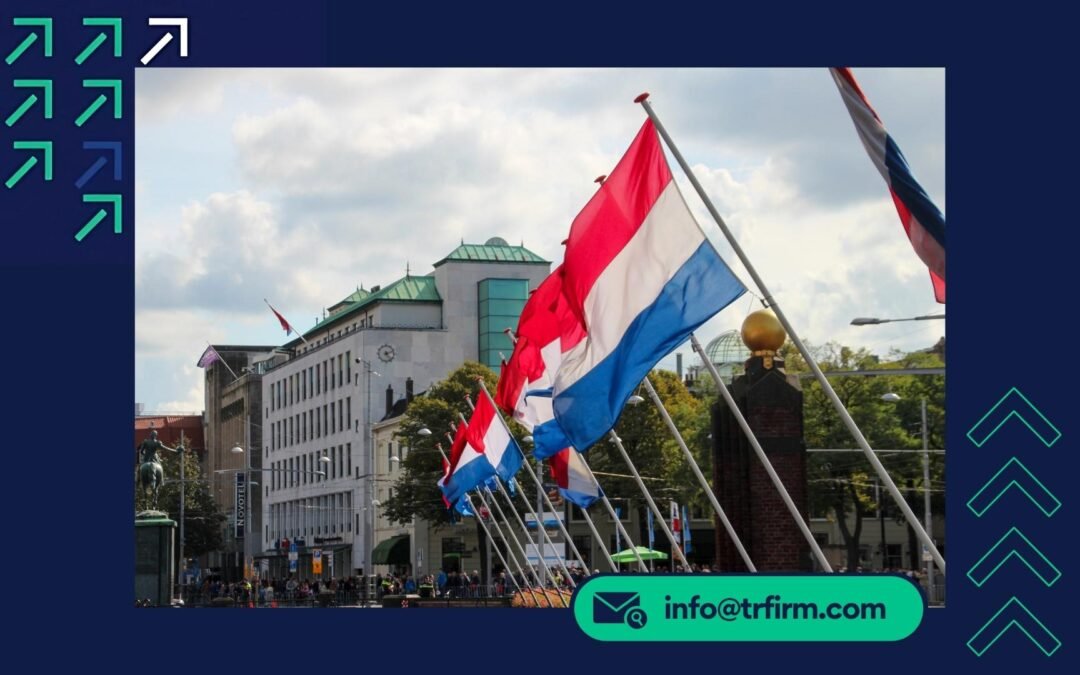
Foreign investors and cross-border businesses have long favoured the Netherlands as a neutral, efficient, and enforcement-friendly venue for resolving complex commercial and investment disputes. Since the 2015 Dutch Arbitration Act re-cast Book Four of the Dutch Code of Civil Procedure (DCCP), the Netherlands has combined pragmatic court support with modern arbitral procedure. For in-house counsel and deal teams operating from Asia (Bangladesh), the Middle East (UAE), and Europe (UK), the Dutch framework offers a stable platform that meshes well with global contracting practice and New York Convention enforcement.
This article explains—in business-first terms—how international arbitration in the Netherlands works today, what changed with the 2015 Act, how the system treats multi-contract and multi-party situations, the scope of challenges and appeals, how enforcement really plays out, and what a foreign company should be careful of when drafting clauses or running a case. Because TRW Law Firm operates in Dhaka, Dubai, and London, we also compare strategic seat choices, court support cultures, and enforcement vectors across these hubs to help you pick the right forum for the contract you are signing today.
If you need a quick primer on our firm’s international arbitration and cross-border disputes capabilities, start here: Tahmidur Remura Wahid (TRW) Law Firm.
1) Snapshot: Why the Netherlands?
Modern statutory backbone. The 2015 Dutch Arbitration Act updated Book Four DCCP, harmonising Dutch practice with leading global standards while keeping local strengths (efficient courts; clear structure).
No “domestic vs international” trap. Unlike some jurisdictions, Dutch law deliberately does not distinguish between domestic and international arbitration for most purposes—reducing threshold litigation about labels.
Institutional depth. The Netherlands hosts premier institutions: the Permanent Court of Arbitration (PCA) in The Hague, the Netherlands Arbitration Institute (NAI) (with 2024 updated Rules), and P.R.I.M.E. Finance for complex financial disputes.
Pro-enforcement stance. Dutch courts are respected for being predictable and supportive; New York Convention membership ensures outbound enforceability, with long limitation periods for recognition/enforcement actions.
Global neutrality. The Netherlands often serves as a neutral seat for JV, EPC, energy, infrastructure, distribution, technology, and finance disputes—including those with parties based in Bangladesh, UAE, UK, and beyond.
Bottom line for foreign companies: The Netherlands is a “default safe seat” for many cross-border deals. It is particularly attractive when you want a civil-law seat with a sophisticated judiciary, strong institutional options, and a pragmatic ethos.
2) Legal Framework: The 2015 Dutch Arbitration Act, Book Four DCCP
The 2015 reform revamped Book Four (Arbitration) of the DCCP and adjusted selected provisions in Books 3, 6, and 10 of the Dutch Civil Code (DCC). Book Four is organised into two Titles and ten Sections, distinguishing only by seat (inside vs outside the Netherlands), not by the international/domestic dimension.
Title One — Arbitration in the Netherlands
Section One: Arbitration Agreement
Section One A: Arbitration Agreement & Jurisdiction of the Courts
Section One B: Arbitral Tribunal
Section Two: The Arbitral Proceedings
Section Three: The Arbitral Award
Section Three A: Arbitral Appeal
Section Four: Enforcement of the Arbitral Award
Section Five: Setting Aside & Revocation
Section Six: Award on Agreed Terms
Section Seven: Final Provisions
Title Two — Arbitration Outside the Netherlands
Tools for Dutch court support even when the seat is elsewhere (e.g., tribunal formation steps when parties have Dutch nexus).
Key policy choices:
No default number of arbitrators in the statute (tribunal size determined by agreement; failing that, a provisional relief judge can decide).
Competence-competence is codified (tribunal rules on its own jurisdiction first).
Separability of the arbitration agreement is recognised.
Court support mechanisms (appointment, consolidation orders via designated third party or court, set-aside ground rules) are spelled out.
3) The Arbitration Agreement: Validity, Form, Separability
A) Validity and Applicable Law (DCC 10:166)
An arbitration agreement is valid if it is valid under any of these laws:
the law chosen by the parties for the arbitration agreement;
the law of the seat; or
absent choice, the law applicable to the underlying relationship.
Why it matters: This multi-pronged validity “savings” rule increases the chance that your clause sticks even if there is uncertainty about which law governs the arbitration agreement as a matter of construction. For foreign companies, it reduces satellite litigation on validity.
B) Form (DCCP 1021; 1020(5))
Must be in writing (including contemporary electronic forms).
Clauses in articles of association or corporate rules can qualify.
Clear signatures and contract hygiene help—especially for multi-party structures (shareholders, JV partners, guarantors).
C) Separability (DCCP 1053)
The arbitration clause is separate from the main contract. If the main contract’s validity is attacked, the clause can survive to route disputes to arbitration.
Foreign company tip: In cross-border deals, expressly state the law governing the arbitration agreement, which can differ from the law of the main contract (e.g., “The arbitration agreement shall be governed by the law of the seat”). This reduces “battle-of-laws” friction later.
4) Arbitral Tribunal: Jurisdiction, Constitution, and Number
A) Competence-Competence (DCCP 1052(1))
Tribunals can rule on their own jurisdiction, subject to later court review on a set-aside application. Practically, this keeps the case moving inside the arbitral forum rather than detouring to court prematurely.
If silent, parties jointly appoint within three months of commencement.
If the seat is undecided, tribunal constitution can still proceed if at least one party is domiciled/resident in the Netherlands (DCCP 1073(2))—a flexible feature that avoids procedural deadlocks.
C) Number of Arbitrators (DCCP 1026(2))
No statutory default. If parties cannot agree, a provisional relief judge decides. In practice, institutional rules will fill the gap:
NAI/LCIA tend to default to a sole arbitrator for many cases, unless complexity warrants three.
HKIAC/ICC exercise institutional discretion based on case factors.
Choosing 1 vs 3 arbitrators:
Sole arbitrator = faster, cheaper, suitable for ≤ USD/EUR 5–10m with narrow issues.
Three arbitrators = more deliberation, suitable for high-stakes technical cases, quantum complexity, or public policy overlays.
5) Proceedings: Due Process, Confidentiality, Arbitrability
A) Four Fundamentals (DCCP 1036)
Parties may shape the procedure (subject to mandatory rules).
Equal treatment of parties.
Right to be heard.
Duty on tribunal (and mutual duty on parties) to avoid undue delay.
Practice point: Dutch tribunals and courts are time-efficiency conscious. Parties that behave reasonably—and propose practical, proportionate timetables—gain credibility that can later influence cost allocation.
B) Confidentiality
The Act is silent. But confidentiality typically arises via:
Rules (e.g., LCIA is express; ICC leaves it to party/tribunal decisions);
Contract (confidentiality clause); or
Procedural order issued by the tribunal.
Foreign company caution: Do not assume secrecy. If confidentiality matters (e.g., trade secrets, sensitive State-owned enterprise data), expressly agree scope and exceptions at the first case management conference.
C) Arbitrability (DCCP 1020(3))
The clause cannot be used to determine legal consequences that the parties cannot freely determine (public policy). Family law, insolvency, and certain regulatory questions remain court territory. Most commercial disputes are arbitrable.
Complex supply chains and JV stacks generate related claims. Book Four equips tribunals and courts with practical joinder and consolidation tools:
Joinder/Intervention (DCCP 1045(1)): A third party with an interest may join/intervene if the same arbitration agreement applies or has entered into force among all relevant parties.
Joinder = support an existing party.
Intervention = assert an independent claim against a party.
Impleader (DCCP 1045a(1)): A respondent can call a third party into the case if the same arbitration agreement binds them (classic contractor → subcontractor chain).
Consolidation (DCCP 1046): A designated third person (agreed by the parties) or, absent that, the Amsterdam provisional relief judge, can order consolidation inside or outside the Netherlands if:
it won’t cause unreasonable delay given case posture; and
proceedings are closely connected, making joint hearing expedient to avoid irreconcilable outcomes.
Foreign company drafting tip: Harmonise seat, law, language, and rules across master agreements, POs, guarantees, side letters, and framework contracts. Add express joinder/consolidation wording to reduce friction. In EPC and tech stacks, this can be decisive.
No statutory time limit. Tribunals set a schedule that fits the case. That said, Dutch practice is efficiency-oriented, and institutional rules (NAI, PCA, P.R.I.M.E. Finance) promote active case management.
B) Arbitral Appeals (Section Three A; DCCP 1061a–1061l)
Arbitral appeal is opt-in only and must be in writing. Parties can define the scope (facts/law), tribunal composition, and timelines. Appeals can be lodged against final awards (and sometimes partial final awards, subject to agreement).
Caution: Appeals add time and cost; most international parties avoid them. If agreed, first-instance awards can still be declared immediately enforceable unless otherwise stipulated.
C) Setting Aside (Annulment) — DCCP 1065(1)
Limited grounds, typical of pro-arbitration jurisdictions:
No valid arbitration agreement;
Tribunal constituted in violation of applicable rules;
Tribunal exceeded mandate or failed to follow instructions;
Award not signed per DCCP 1057 or insufficiently reasoned;
Award (or its making) contrary to public order.
Deadline: Generally three months from dispatch of the award (DCCP 1064a(2)).
D) Revocation (DCCP 1068(1))
Exhaustive grounds post-award: fraud, forged documents, or newly discovered decisive documents withheld by the other party. Deadline: three months from discovery (DCCP 1068(2)).
E) Enforcement & Stays
Set-aside or revocation proceedings do not automatically stay enforcement (DCCP 1066(1); 1068(2)). Courts can order a stay if justified (DCCP 1066(2); 1068(2)). This balance deters tactical challenges designed purely to delay payment.
8) Enforcement in and from the Netherlands
The Netherlands is a New York Convention state (since 1964). Dutch courts are robust on recognition and enforcement principles.
A 20-year limitation period may apply to recognition/enforcement of foreign awards (DCC 3:324) from the day after the decision or after any external conditions are fulfilled.
Foreign company practice:
At contract stage, map assets and enforcement routes (Netherlands, Bangladesh, UAE, UK, other).
Consider whether a Netherlands seat combined with NAI/PCA rules optimises your enforcement geometry.
9) Investment Arbitration in the Netherlands
Home to the PCA, a global anchor for State-investor and treaty-based disputes.
The Netherlands is party to ICSID and numerous BITs (subject to EU law evolution after Achmea concerning intra-EU arbitration).
Dutch courts have played pivotal roles in high-profile set-aside matters (e.g., the well-known Yukos litigation path), demonstrating judicial sophistication with complex treaty cases.
Investor takeaway: For treaty claims with European or global vectors, a Netherlands seat offers deep institutional capacity and jurisprudential maturity.
10) Institutions: PCA, NAI, and P.R.I.M.E. Finance
PCA (The Hague): 1899 origin; handles State-to-State, investor-State, and complex multi-party commercial matters.
NAI (Rotterdam/The Hague): 1949 origin; modernised 2024 NAI Rules (expedited track, early determination, TPF disclosure, mandatory CMC, consolidation).
P.R.I.M.E. Finance (The Hague): Specialist forum for financial market disputes, with expert rosters and bespoke rules (revised in 2022).
Choosing between them:
Commercial EPC/tech/energy: NAI or PCA (commercial rules) often suit.
Best for:EU-facing supply chains, complex EPC and infrastructure, tech/licensing where you want civil-law neutrality and Dutch court support.
B) London Seat
Pros:Common-law sophistication; powerful interim tools (worldwide freezing orders in proper cases); deep pool of arbitrators and experts; funding market familiarity.
Best for: Financial services, commodities, energy trading, complex corporate disputes; where parties or assets touch the UK or common-law jurisdictions.
C) Dubai Seat (onshore UAE, or DIFC/ADGM ecosystems)
Pros: Strategic Gulf hub; DIFC/ADGM common-law courts with English-language procedures; flexible recognition pathways; strong relevance for MENA, logistics, ports, and free-zone businesses.
Best for:GCC-centric deals, distribution, logistics, construction, and projects with UAE-based assets or receivables.
TRW cross-hub strategy: We often seat in the Netherlands (or London) while planning enforcement vectors into the UAE (DIFC/ADGM or onshore) and Asia. Clause and forum design start from the asset map, not tradition.
12) Drafting: Model Clause Building Blocks (Illustrative)
Any dispute arising out of or in connection with this Agreement, including any question regarding its existence, validity or termination, shall be finally resolved by arbitration under the [NAI / PCA / P.R.I.M.E. Finance] Arbitration Rules in force at the time of commencement. • Seat (legal place):[Amsterdam / The Hague / Rotterdam]. • Tribunal:[one / three] arbitrator(s). • Language:English. • Governing Law of the Contract:[specify]. • Governing Law of the Arbitration Agreement:[law of the seat / specify]. • Consolidation & Joinder: Claims arising under related contracts between the Parties may be heard in a single arbitration; third parties bound by compatible arbitration agreements may be joined/intervene as permitted by the Rules and Dutch law. • Confidentiality: The Parties agree that the proceedings (including submissions, evidence, orders, and awards) are confidential, subject to disclosures required by law, regulator, auditor, or exchange rules. • Interim Relief: The tribunal may grant interim/provisional measures; application to courts of competent jurisdiction for supportive relief shall not be incompatible with this agreement. • Expedited Features: The Parties [opt in / opt out] of any expedited procedures under the chosen Rules regardless of amount in dispute. • Electronic Proceedings: The Parties consent to electronic service, virtual hearings, and e-bundles unless the tribunal orders otherwise.
Foreign company checklist when drafting:
Align seat, law, rules across all related contracts.
Decide sole vs three arbitratorsnow (don’t leave it to later).
Specify governing law of the arbitration agreement.
Bake in consolidation/joinder and confidentiality.
Consent to virtual process if you want speed and lower cost.
Anticipate third-party funding disclosures in institutional rules (e.g., NAI 2024).
13) Running a Netherlands-Seated Case: A Playbook for Foreign Companies
Clause hygiene: Avoid asymmetries: if your JV has 6 related documents, keep clauses harmonised.
Asset mapping: Chart the counterparty’s hard assets, receivables, bank counterparties in the Netherlands/EU, UK, UAE, and Asia to anticipate enforcement leverage.
B) When the Dispute Emerges
Chronology & issues list: Build a single source of truth; separate entitlement and quantum tracks.
CMC strategy: Propose a proportional timetable, focusing disclosure on documents that truly move the needle; suggest page limits and issues lists.
Experts: Decide early: delay/programming (critical path), technical (spec compliance), quantum (damages flows). Pick experts who can collaborate on joint statements.
C) During Proceedings
Confidentiality protocol: Sign off who can see what (in-house, external, experts, third-party vendors).
Virtual by default: Reserve in-person only for witness-heavy or credibility-sensitive hearings.
Conduct discipline: Tribunals tend to reward cooperation and penalise obstruction via costs under modern rules and the spirit of DCCP 1036.
D) Settlement Dynamics
Use inflection points (after expert joint statements, pre-hearing briefs) to table reasoned offers linked to your quantum model.
If the other side has TPF, calibrate proposals to the funder’s IRR math and risk appetite.
Keep enforcement memoranda ready—seeing the path to cash changes minds.
E) After the Award
Enforcement track: Decide where to recognise and attach first (Netherlands, UK, UAE, Bangladesh, other).
Counter-challenge: If the other side moves to set aside, resist stays unless there is genuine merit; otherwise, keep pressure through cross-border filings.
14) Confidentiality, Data Protection, and Cybersecurity
Because the statute is silent on confidentiality, you must create your own defensible framework:
Cyber protocols: locked rooms for witnesses, no off-camera devices, agreed screen-share etiquette, secure e-bundles, MFA access control.
Regulatory overlays: If you are listed, State-controlled, or regulated (banking, telecoms, energy), make carve-outs for legally mandated disclosures.
15) Documentary Evidence & Experts: Making the Record Count
Documents win cases. Tribunals give significant weight to contemporaneous records. Curate thematic bundles (e.g., Delay & LDs, Spec Compliance, Change Orders & Pricing) with short roadmaps.
Witnesses explain; they don’t argue. Train on exhibit navigation, timelines, and “one fact per answer.”
Experts persuade with method, not adjectives. Align expert methodology with how Dutch tribunals evaluate reliability: transparent inputs, reproducible calculations, and frank treatment of uncertainty via sensitivity analyses.
16) Interim Relief & Court Support
Emergency arbitrator mechanisms and tribunal interim measures are typically available under institutional rules (NAI, PCA).
Dutch courts can support with evidence preservation, third-party orders, and (in appropriate cases) stays. Strategy should reflect seat and asset location. If assets sit in Dubai or London, plan supportive applications in DIFC/ADGM or English courts for maximum pressure.
17) Funding (TPF), Costs, and Budget Discipline
Expect disclosure of funder identity under modern institutional rules and procedural orders.
Consider security for costs where the opponent’s solvency is doubtful or where TPF is used.
Run decision trees (with probabilities and cost nodes) rather than single-point budget guesses; update after each procedural milestone.
18) Common Pitfalls for Foreign Companies (and How to Avoid Them)
Mismatched clauses across related contracts → fix with harmonised seat/law/rules and consolidation wording.
Silence on the law of the arbitration agreement → add a short sentence choosing the seat law.
Over-broad disclosure requests → propose surgical requests and sample-based approaches where proportionate.
Assuming confidentiality → write it down; agree scope and exceptions.
Waiting on enforcement planning → map assets day one; your settlement leverage depends on it.
Choosing three arbitrators by habit → consider a sole arbitrator for mid-value disputes to save cost/time.
Ignoring virtual efficiencies → virtual CMCs and focused virtual hearings can halve out-of-pocket costs.
19) Frequently Asked Questions
Q1: Is a Netherlands seat suitable if our counterparty and assets are in the GCC? Yes, particularly if you want EU-law neutrality and intend to enforce in Dubai via DIFC/ADGM or onshore courts. Clause drafting and forum selection should match your asset map—we often design a Netherlands seat with an enforcement vector through UAE courts.
Q2: Can we keep proceedings confidential even though the Act is silent? Yes—via rule selection, contractual confidentiality, and procedural orders. Decide scope early (submissions, evidence, transcripts, award).
Q3: Should we agree to arbitral appeal? Usually no. It lengthens proceedings and adds cost. Most international parties rely on limited set-aside grounds instead.
Q4: How do Dutch courts treat set-aside? Dutch courts are known for a pro-arbitration stance with narrow annulment grounds. Tactical set-aside attempts rarely succeed if the tribunal acted within its mandate and observed due process.
Q5: Can we consolidate arbitrations with a connected London-seated case? Possibly. DCCP 1046 allows consolidation with proceedings inside or outside the Netherlands if conditions are met and delay is not unreasonable. Drafting ex ante to allow cross-forum efficiency helps.
Pick seat/law/rules deliberately; don’t default by habit.
State governing law of the arbitration agreement.
Align clauses across all related documents; add consolidation.
Choose sole vs three arbitrators based on value/complexity.
Agree confidentiality and e-proceedings (virtual CMCs/hearings).
Build a chronology and issue list as soon as a dispute looms.
Select experts early; mandate joint statements to narrow gaps.
Keep disclosure proportionate; document opponent’s obstruction for costs.
Prepare enforcement memoranda keyed to Netherlands/UK/UAE/Bangladesh.
Run a decision-tree budget, updating after each milestone.
21) Structured Summary Table — International Arbitration in the Netherlands
Topic
What Dutch Law/Practice Provides
Why It Matters for Foreign Companies
Action Points
Legal Backbone
2015 Dutch Arbitration Act (Book Four DCCP), no domestic/international split
Reduced threshold disputes; modern procedure
Choose the Netherlands when neutrality and predictability are key
Validity of Clause
Multi-law validity (seat/choice/underlying law)
Raises survival odds of the clause
Add explicit law of the arbitration agreement
Tribunal Power
Competence-competence; separability
Tribunal controls early; fewer detours to court
Structure jurisdictional objections strategically
Number of Arbitrators
No statutory default; court can decide; rules often default to sole
Flexibility to tune cost/speed
Decide 1 vs 3 upfront
Procedure & Due Process
Equal treatment, right to be heard, anti-delay duty
Efficiency and fairness framework
Propose a practical timetable at CMC
Confidentiality
Not statutory; via rules/contract/orders
Avoid assumptions; codify scope
Insert a confidentiality clause
Multi-party Tools
Joinder, intervention, impleader, consolidation
Handle webs of contracts/parties coherently
Harmonise clauses; add express rights
Awards
No fixed time limit; tribunal manages
Flexibility to fit case complexity
Use CMC to set realistic milestones
Appeals
Opt-in arbitral appeal possible but rare
Appeals add cost/time
Usually decline arbitral appeal
Set-Aside/Revocation
Narrow grounds; strict timelines
Predictable finality
Keep records pristine; protect due process
Enforcement
NYC friendly, 20-year period (recognition/enforcement)
Strong outbound enforcement
Map assets and plan filing order
Institutions
PCA, NAI (2024 Rules), P.R.I.M.E. Finance
Choice for State/commercial/finance disputes
Pick the forum that matches dispute profile
Netherlands vs UK vs UAE
All friendly; pick by asset/industry geometry
Better leverage and speed when aligned
Design seat with enforcement vector in mind
Interim Relief
Emergency arbitrator & court support
Protects value early
Plan supportive court apps in NL/UK/UAE
Funding & Costs
TPF disclosures under rules; security for costs tools
Budget realism & risk control
Adopt TPF policy; consider security requests
22) How TRW Law Firm Helps (Dhaka • Dubai • London)
Clause Engineering: We draft seat-smart and enforcement-aware clauses that travel well across related contracts—harmonising seat, law, rules, joinder/consolidation, confidentiality, and virtual process.
Case Management Discipline: We front-load chronologies, issue lists, and procedural proposals that tribunals adopt. We prefer surgical disclosure over volume, aligning with DCCP’s anti-delay ethos.
Expert-First Quantum: We build transparent damages models and align expert teams to a common factual matrix so numbers survive cross-examination.
Enforcement Vectors: We design cases to convert awards into cash using Netherlands/UK/UAE court ecosystems—DIFC/ADGM conduit options, English freezing tools, and Dutch pro-enforcement pathways.
Governance & Confidentiality: For State-owned and listed clients, we implement audit-ready confidentiality tiers, cyber protocols, and board-level reporting without sacrificing advocacy.
For a fuller overview of who we are and how we operate, you can start here: TRW Law Firm.
London: 330 High Holborn, London WC1V 7QH, United Kingdom
TRW is a Bangladesh-headquartered international law firm with active arbitration and enforcement practices spanning Asia, the Middle East, and Europe. If you are negotiating a cross-border contract or facing a Netherlands-connected dispute, our teams in Dhaka, Dubai, and London can help you design the right clause, prosecute efficiently, and—most importantly—enforce effectively.
Reaching for the Stars: Arbitration of Space-Related Disputes — A TRW Guide for Foreign Companies, Investors, and State Entities (with London–Dubai–Dhaka Perspectives)
Commercial space is no longer a niche. Launch costs are falling, satellites are proliferating, ground networks are more software-defined than ever, and governments are outsourcing to private players at scale. With this acceleration comes a predictable reality: more disputes—over manufacturing defects, launch failures, in-orbit anomalies, frequency interference, delays, spectrum access, data rights, insurance coverage, export controls, national-security carve-outs, and investment protections. Most of these disputes are contractual or treaty-based and, in practice, gravitate to international arbitration.
This TRW guide distils what foreign companies, financiers, insurers, and state-linked operators should plan for—from clause engineering and forum selection to evidence strategy, damages models, and enforcement on Earth—with practical angles from our teams in London (High Holborn), Dubai (Sheikh Zayed Road), and Dhaka (HQ).
1) What “Space Arbitration” Really Covers (and Why It’s Growing)
“Space disputes” are not limited to rockets and satellites. They span an entire stack:
Downstream (ground & data): gateway and teleport services, virtualized ground segment, spectrum and interference, cloud processing, earth-observation analytics, data licensing, cyber incidents.
Finance, insurance, and public–private partnerships: vendor finance, export credit, political-risk cover, launch and in-orbit insurance, reinsurers’ participation, sovereign overlays.
Tourism and beyond: suborbital tourism, microgravity research, in-situ resource utilization (ISRU), lunar infrastructure, and station agreements.
Why arbitration? It offers neutrality, technical adjudication, enforceability under the New York Convention, procedural privacy, and the ability to tailor procedure for highly technical evidence (telemetry, fault trees, FMEA reports, RF logs, AI-assisted analytics).
2) Governing Law Backdrop: Treaties, National Laws, and the Contract Core
The space domain sits atop international treaties (e.g., Outer Space Treaty, Liability Convention, Registration Convention) and national licensing laws (launch, export control, spectrum, insurance, environmental approvals). But most disputes you will actually arbitrate arise from contracts (manufacture, launch, operations, data) or investment treaties (BITs) when state conduct affects investments.
Key takeaways for foreign parties:
Treaties rarely prescribe arbitration; your contract does the heavy lifting.
National laws (e.g., licensing, export controls, sanctions) may override contract performance; draft change-in-law and illegality clauses with eyes open.
In treaty cases, the “territorial nexus” of an investment can be satisfied via on-earth assets/operations (shares in local operators, ground stations, local contracts), even if the satellite orbits in space.
For a Bangladesh-centred primer on building arbitration into your cross-border deals, see TRW’s resource on International Arbitration in Bangladesh (internal).
3) Choosing the Forum and Rules: PCA “Outer Space” vs. Mainstream Sets
You have multiple credible pathways:
Mainstream institutions/rules: ICC, LCIA, SIAC, SCC, UNCITRAL (ad hoc), DIAC, ADGM, DIFC-LCIA (legacy), ICSID (for treaty claims), etc. These rules are battle-tested for complex technical disputes.
PCA Optional Rules for Space-Related Disputes: offer lists of space-savvy arbitrators/experts and enhanced confidentiality tooling. They are a useful menu, but most modern space disputes still proceed under general rules.
When to prefer mainstream rules:
You want predictability and a large arbitrator pool with heavy complex-tech and heavy-industry experience.
Your counterparties (finance, insurers, reinsurers) are already calibrated to ICC/LCIA/SIAC timetables and cost profiles.
You foresee multi-contract consolidation needs across a supply chain (e.g., satellite, launch, ground, data).
When PCA “Outer Space” Rules may help:
High-stakes disputes with state agencies or intergovernmental partners, where a public-international-law flavour and specialist expert lists can smooth appointments.
Matters where confidentiality engineering (e.g., confidentiality adviser) around export-controlled or national-security-sensitive materials will be mission-critical.
4) Seat, Law, and Language: London, Dubai/ADGM–DIFC, or Elsewhere?
Your seat of arbitration determines the lex arbitri (procedural law) and court supervision. For foreign parties, three practical clusters dominate:
London (English lex arbitri).
Pros: deep jurisprudence on arbitration agreements/separability, robust pro-arbitration courts, emergency relief, global finance comfort, English language by default.
Use when: your lenders/insurers insist on English law; you need access to world-class experts and courts accustomed to complex tech and sanctions issues.
Dubai (DIAC / ADGM / DIFC).
Pros: modern, arbitration-friendly courts; English-language common-law courts in ADGM and DIFC; proximity to launch customers, sovereigns, and regional insurers; fast access to MENA witnesses and evidence.
Use when: counterparties or assets are in the Gulf; you need time-zone coverage and courts that readily support interim measures (incl. freezing orders) in English.
Other seats (Paris, Geneva, Singapore, The Hague).
Pros: each has a respected arbitral infrastructure; Paris/Geneva handle heavy aerospace and reinsurance; Singapore is strong on tech and data disputes; The Hague aligns naturally with PCA administration.
Hybrid structures:
Keep finance/security documents under English law, London seat (investor comfort).
Keep project execution (manufacturing/EPC, ground services, data SLAs) under a seat convenient to performance (e.g., Dubai/ADGM) with English as the language.
Align consolidation/joinder across the suite so related disputes can be heard together.
5) Anatomy of a Modern Space Contract (and the Arbitration Clause You’ll Need)
Every agreement in the stack should have a robust dispute clause. Build for clarity and efficiency, not just “arbitration somewhere someday.”
Core drafting points:
Scope: “arising out of or in connection with,” including non-contractual claims (tort, misrepresentation, unjust enrichment) and statutory/regulatory claims where possible.
Seat and rules: Name the city and the rule set; avoid “venue” ambiguity.
Language: Default to English; specify translation mechanics for technical annexes.
Tribunal size: Sole arbitrator for lower-value/straightforward disputes; three arbitrators for high-stakes or highly technical cases.
Appointment mechanics: Provide a deadlock breaker (institution/appointing authority); pre-agree a technical expertise requirement.
Consolidation/joinder: Explicit permissions for multi-contract programmes (manufacture/launch/ground/data).
Confidentiality: Extend beyond the rules; cover disclosures to insurers, reinsurers, funders, auditors, export-control counsel, and financing banks.
Interim relief & emergency arbitrator: Opt in where available; preserve court interim measures (asset/freezing orders, evidence preservation).
Governing law (contract) vs. law of the arbitration agreement: State both to avoid later fights about validity/scope.
Remedies & exclusions: Tailor caps, limitations, carve-outs for wilful misconduct/gross negligence, and liquidated-damage frameworks for delay or service-level breaches.
Force majeure & change in law: Space weather, range closures, launch window cancellations, export denials, sanctions expansions—define what qualifies and how costs/time are allocated.
Data & IP clauses: Ownership of telemetry/EO data, derivative analytics, training data for AI-models; licences back to operators; export-control-compliant access.
6) “Red Flag” Issues Foreign Companies Should Address Upfront
Export Controls & Sanctions (UK/US/EU/GCC).
ITAR/EAR-controlled components, encryption tech, RF modules, star trackers—map the bill of materials and define who applies for licences, what happens if a licence is denied, and cost/time consequences.
Sanctions snap-back clauses with termination rights and unwind mechanics.
National Security Carve-Outs.
Many governments maintain override powers (spectrum allocation, orbital slots, data priority). Draft change-in-law/illegality clauses and pricing adjustments. For UK/GCC, anticipate national security and investment regimes.
Spectrum & Interference.
Assign responsibility for ITU filings, EPFD thresholds, coordination with neighbours, and remedies for harmful interference (step-down protocols, fee credits, termination thresholds).
Insurance & Reinsurance Alignment.
Ensure contract exclusions and liability caps align with policy wording (launch + in-orbit). Require loss payee arrangements; manage co-insurance and cut-through with reinsurers where possible.
Data & Cyber.
Define sovereignty and routing for sensitive data (defence, critical infrastructure). Map GDPR/UK GDPR and regional privacy. Bake in incident response SLAs and forensic cooperation duties.
On-Orbit Servicing & Debris Liability.
Allocation of risk for servicing missions; liability floors for debris events; active debris removal cooperation; notification obligations under national licences.
Acceptance & Warranty Regimes.
Clear A/B/C-level acceptance, waiver mechanics, and obsolescence risk for components with short tech cycles.
Step-Down ADR before Arbitration.
For true emergencies (launch window), step-downs may be impractical. If included, make timelines short and deemed-exhausted if a party refuses to engage.
7) Procedure that Works for Space: Evidence, Experts, and Confidentiality
Evidence realities:
Telemetry & RF logs: secure hashes, synchronized time bases (UTC), chain of custody, and expert annotations.
FMEA & fault-tree analysis: retain models and inputs; disclose sensitivity limits under confidentiality orders.
Acceptance test records & thermal-vacuum data: ensure naming conventions and indexation from day one.
Space situational awareness (SSA) data: preserve data from independent providers (where permissible), sensor operator logs, and conjunction alerts.
Experts:
Tribunals increasingly hot-tub technical experts (simultaneous evidence). Pre-vet independent experts with genuine satellite/launch/ground credentials and prior testimony experience.
Confidentiality engineering:
Go beyond default rules: classify export-controlled information; use confidentiality advisers when one side cannot access certain materials; implement secure data rooms and differential access.
Document production:
Tribunals favour targeted, proportional production (IBA Rules-style), not broad discovery. Prepare Redfern Schedules that tie requests to specific technical issues.
8) Interim Measures: Keeping the Mission Alive
Typical interim relief requests include:
Preservation orders for telemetry servers, RF recordings, and acceptance test data.
Status-quo orders to prevent de-orbiting, decommissioning, or reallocation of capacity pending the award.
Anti-suit/anti-arbitration injunctions (seat-court dependent) to protect the agreed forum.
Security for costs where counterparty solvency is uncertain or third-party funding is involved.
Seats like London (and English-law courts) are particularly adept at rapid interim relief. Dubai/ADGM/DIFC courts also offer responsive regimes, in English, with enforceable interim orders across the UAE in many scenarios.
9) Damages & Quantum in Space Cases: How Tribunals Think
Space disputes invite complex quantum models:
Replacement cost & time to rebuild (new satellite, rideshare delays, lost launch window).
Loss of expected service life (reduced operational life from fuel loss; panel degradation).
Plan early for quantum experts (aerospace engineering + forensic accounting) and a documented mitigation programme (what you tried, when, and why).
10) Insurance, Subrogation, and the Arbitration Overlay
Launch and in-orbit policies are specialised; clauses around notify-and-cooperate, salvage, and partial loss matter.
Subrogated insurers may step into your shoes; draft dispute clauses with joinder/consolidation possibilities to avoid parallel fights (insured vs. insurer vs. manufacturer vs. launcher).
Consider cut-through endorsements where reinsurers’ participation is material to settlement dynamics.
11) Public Policy, Illegality, and National-Security Defences
Enforcement-stage defences (public policy/illegality) are narrow but potent if your contract is mis-aligned with licensing or sanctions realities. Reduce the surface area:
Keep a licence map with timelines and responsible parties.
Maintain a compliance logbook evidencing export-control diligence, sanctions screenings, and governmental notifications.
Use change-in-law and illegality clauses that provide structured outcomes (suspension, workaround, termination, fee credits).
12) Enforcement on Earth: Where You Actually Get Paid
Awards are only as good as their enforcement path:
Identify attachable assets early: ground stations, bank accounts, receivables from anchor customers, equipment on Earth, IP portfolios.
Model recognition and enforcement in jurisdictions where counterparties bank or hold assets (UK, UAE, EU hubs, Singapore).
Anticipate sovereign immunity posture for state-linked counterparties; draft waivers of immunity from suit/enforcement where lawful.
TRW’s teams co-design enforcement maps during pleadings—not after the award.
13) Investor–State Dimensions (for State Measures Impacting Space Businesses)
If a state revokes spectrum access, withholds orbital slot coordination, imposes discriminatory capacity reservations, or restructures licence fees, foreign investors may have treaty claims:
Jurisdictional nexus: even where satellites orbit in space, holdings in local operators, ground assets, and regulated licences can ground the “territory” element.
Standards: fair and equitable treatment, national treatment/MFN, indirect expropriation, arbitrary/discriminatory measures, denial of justice.
Remedies: compensation at fair market value, often with interest; declaratory relief; settlement with prospective regulatory guarantees.
Treaty structuring should be considered before you sign the commercial contracts—our London team aligns arbitration strategy with investment-protection routes; Dubai aligns for Gulf treaties and sovereign counterparties; Dhaka drives the document engine and evidence programme.
15) London & Dubai Perspectives: How Forum Choice Shapes Tactics
London:
English courts can support arbitration with injunctions (anti-suit, asset preservation).
English law’s developed jurisprudence on separability, non-signatory doctrines, and arbitration agreement law reduces threshold fights.
Strong expert ecosystems in aerospace engineering, RF/spectrum, cyber, and quantum.
Dubai/ADGM/DIFC:
English-language, common-law court systems (ADGM, DIFC) simplify complex applications, including recognition of foreign interim orders in many cases.
Proximity to GCC sovereigns, space agencies, regional insurers, and ground-segment vendors enables faster practical coordination.
DIAC’s updated rules (and ADGM/DIFC frameworks) are arbitration-friendly and well-suited to multi-contract programmes tied to Gulf operators or launch customers.
Practice note: For multi-jurisdiction operations, we often propose staggered seats (finance vs. project execution) but with coherent consolidation logic to avoid splintering. Our Dhaka team maintains the master clause matrix and evidence plan; London and Dubai handle seat-court interfaces and high-stakes applications.
16) From Day-Zero to Award: A Space Dispute Playbook
A. Before Contract Signature
Harmonise law/seat/language across the transaction suite.
Lock consolidation/joinder allowances and an appointing authority.
Insert export-control and sanctions clauses with defined consequences and cooperation duties.
Align insurance provisions with policy wording and reinsurer realities.
Define data/IP ownership and access (telemetry, raw vs. processed, derivative models).
Any dispute arising out of or in connection with this Agreement, including any question regarding its existence, validity or termination and any non-contractual obligations arising out of or in connection with it, shall be referred to and finally resolved by arbitration under the [chosen rules]. The seat (legal place) of arbitration shall be [London / Dubai (ADGM/DIFC) / …]. The tribunal shall consist of three arbitrators. The language of the arbitration shall be English. The parties agree that the tribunal may order interim or conservatory measures and that nothing herein prevents application to any competent court for interim relief. The parties consent to consolidation and/or joinder with disputes arising under related agreements identified in Schedule [•].
…sole arbitrator… expedited procedure for disputes below [USD •m] … confidentiality undertakings applicable to insurers, reinsurers, funders, auditors and government licensors … targeted document production consistent with IBA Rules …
(We tailor these to accommodate export-control gates, sanctions, SSA secrecy protocols, and insurance interfaces.)
18) ESG, Debris, and Sustainability: The Disputes You Want to Avoid
Debris mitigation plans (post-mission disposal, passivation) must tie to contractual obligations and acceptance criteria.
Sustainability covenants in financing can affect remedies; breach may trigger loan defaults.
Transparency on conjunctions: define shared obligations to notify of close approaches and cooperate on avoidance manoeuvres.
19) Common Pitfalls (and How to Avoid Them)
Undefined “seat” (parties wrote “venue”). Result: procedural fights. Fix: name the legal seat.
Silence on data ownership. Result: stalemates over telemetry access and derivative training data. Fix: split raw vs. processed vs. derivative rights.
Misaligned insurance to liability caps. Result: gaps and subrogation complexity. Fix: cross-walk policy terms with contract remedies.
Overbroad confidentiality without carve-outs. Result: blocked insurer/reinsurer engagement. Fix: explicit permitted disclosures under NDAs.
No joinder/consolidation. Result: parallel arbitrations across satellite/launch/ground. Fix: coordinated clause suite.
20) TRW’s London–Dubai–Dhaka Model: How We Execute
Dhaka (HQ):
Clause engineering across transaction suites, document and evidence programme, memorial drafting engine, cost-efficient review at scale.
GCC sovereign and agency interface, ADGM/DIFC applications, bilingual stakeholder management, regional sanctions/export control alignment, on-the-ground coordination with ground-segment providers and integrators.
Seamless relay: We operate a 24/7 relay so filings, evidence work, and expert coordination advance continuously during tight windows (launch windows do not wait).
21) FAQs (For Foreign Parties, In Plain English)
Q1: Do we need special “space rules” to arbitrate a satellite dispute? No. Mainstream rules (ICC/LCIA/SIAC/UNCITRAL) work well. Space-specific rules can help with experts and confidentiality scaffolding, but they’re not a prerequisite.
Q2: Can hearings be held in London or Dubai if the seat is elsewhere? Yes. Venue can be distinct from seat. Many tribunals sit in London/Dubai for convenience while keeping a chosen legal seat.
Q3: Will export-controlled information derail disclosure? Not if you plan it. Use confidentiality orders, restricted data rooms, and (where needed) confidentiality advisers. Draft for this before the dispute.
Q4: How do tribunals treat interference claims? Carefully and evidence-heavily: RF logs, SSA corroboration, reproducible analyses, and mitigation steps matter. Remedies often tie to service credits, partial refunds, or targeted performance orders.
Q5: Is investor-state arbitration viable for spectrum or licence shocks? Often yes—if you’ve structured through a treaty-protected jurisdiction and your investment has a territory nexus (e.g., local operator shares, ground assets). Plan before the shock.
Q6: What’s the typical timeline? For a three-member tribunal with two memorial rounds and 3–5 hearing days: roughly 12–18 months to award, barring extensive interim applications.
Q7: Can we stop a counterparty from reallocating capacity pending arbitration? Seats like London and courts in ADGM/DIFC can issue interim orders to preserve the status quo. Draft your clause to preserve court interim relief.
22) Executive Playbook: Your Ten-Point Launch Checklist
Seat & Rules: Decide London vs. Dubai (or other) with lender/insurer buy-in; pick rules that match your programme.
Clause Matrix: Harmonise across manufacture, launch, ground, and data; add consolidation/joinder and appointing authority.
Export/Sanctions Plan: Identify licences, who applies, and consequences of denial/withdrawal.
The 2025 HKIAC Administered Arbitration Rules — A Complete, Business-Focused Guide for Foreign Companies (TRW 2025)
Effective date: 1 June 2025 Who should read this: Founders, GCs, CFOs, investment managers, EPC leaders, JV boards, procurement heads and anyone negotiating or litigating cross-border contracts with an Asia footprint.
Hong Kong International Arbitration Centre (HKIAC) remains a premier venue for Asia-related disputes. The 2024 HKIAC Administered Arbitration Rules (the “2024 Rules”) refine an already market-leading framework, adding targeted powers for case efficiency, clearer tools for tribunal management, and modern policy cues on diversity, environmental impact, and information security. For multinationals, funds, and high-growth tech companies contracting across Hong Kong, mainland China, the Gulf (Dubai), London, and South Asia, these changes matter immediately: they influence how you draft clauses today and how you execute dispute strategy tomorrow.
Tahmidur Remura Wahid (TRW) Law Firm operates internationally from Dhaka, Dubai, and London, with bilingual disputes teams that run HKIAC cases end-to-end—from clause design and emergency relief to final award and enforcement. This guide explains what changed, what it means in practice, and the playbook we use to protect cost, timetable and outcome across jurisdictions.
Geography & deal reality. Many supply chains, financings, and JV structures still hinge on China-adjacent assets, data, and witnesses. HKIAC is “close enough” to the commercial action while offering a robust legal infrastructure and a sophisticated bench of arbitrators.
Procedural credibility. Time and cost discipline, strong consolidation/joinder tools, emergency relief options, and a deep roster of bilingual tribunals make HKIAC ideal for multi-contract ecosystems (manufacturing, EPC, licensing, distribution).
2024 refresh. The Rules now codify powers tribunals and the Secretariat already exercised in practice—streamlining disputes without upending party autonomy.
2) The Big Themes in the 2025 Rules
A) Efficiency & Integrity
Article 13.10 (new): HKIAC may “take any measure necessary to preserve the efficiency or integrity of the arbitration” after consultation. In exceptional circumstances, it can revoke an arbitrator’s appointment where the arbitrator is prevented from or has failed to perform.
Representative changes (Arts 13.8–13.9): Parties must promptly communicate any proposed change/addition of legal representatives after constitution. Tribunals can exclude new representatives to avoid conflicts.
Deposits (Art 41.4): If deposits are unpaid pre-constitution, HKIAC can suspend/cease administration. Post-constitution, the tribunal can suspend, terminate or proceed piecemeal.
Expedited procedure (Art 42.2(f), 42.3): HKIAC can extend the 6-month award deadline in appropriate circumstances (a calibrated standard). Tribunals may request non-application of expedited procedure where unsuitable.
Closure & award timing (Art 31.1–31.2): Proceedings must close within 45 days of last directed substantive submissions (excluding costs) where parties had a reasonable opportunity to be heard; award remains due within 3 months of closure.
Why it matters: These tools discipline drift—late counsel substitutions, tactical delays, or under-performing arbitrators can now be countered earlier and with institutional backing.
B) Diversity, Environment, and Information Security
Article 9A (new): Parties, co-arbitrators, and HKIAC are encouraged to consider diversity when designating or appointing arbitrators.
Article 13.1: Tribunals must tailor procedure to avoid unnecessary delay/expense having regard to information security, environmental impact, complexity, amounts in dispute, and technology use.
Article 34.4: Tribunals can consider adverse environmental impact from party conduct when awarding costs.
Why it matters: Boards and LPs increasingly ask how their disputes reflect ESG commitments. The 2024 Rules let tribunals price environmental wastefulness (e.g., unnecessary travel or printing) into cost orders and formalise expectations on cybersecurity.
C) Preliminary Issues, Bifurcation, and Staging
Article 13.6 (new): After party consultation, tribunals may decide preliminary issues, bifurcate, run sequential stages, and time which issues get determined when. This codifies early disposition/bifurcation practices and gives tribunals firmer footing to carve out liability first or knock out manifestly weak points of law or fact.
Why it matters: Early decisions (e.g., on limitation, jurisdiction, key contractual interpretation) can save millions and unlock settlements months earlier.
D) Costs, Fees, and the “Safety Valve”
Costs (Art 34.4): Explicit factors now include relative success, scale/complexity, party conduct, outcome-related fee structures, third-party funding, and adverse environmental impact.
Schedules 2–3: Where fees are hourly, HKIAC may review/adjust tribunal fees and expenses; where fees are ad valorem, HKIAC has the final say on quantum, considering work done and complexity. This is the institutional “safety valve” to keep fees proportionate.
Why it matters: Corporate budget committees will appreciate that both party conduct and tribunal performance can be aligned to cost discipline.
3) What Foreign Companies Should Do Differently (Right Now)
3.1 Clause Drafting — A 12-Point Checklist
Seat & governing law. For Asia-facing deals, Hong Kong seat + Hong Kong law or another chosen law (English law remains popular) works well. If you foresee onshore PRC interim relief needs, coordinate with PRC advisors on parallel preservation routes via Hong Kong courts.
Institution. Say “HKIAC Administered Arbitration Rules (effective 1 June 2024, as amended)” to avoid ambiguity.
Arbitrators. Prefer three-member tribunals for complex or high-value disputes; name qualification criteria (e.g., construction experts, finance disputes, bilingual capacity).
Language. Fix English (and, if necessary, Chinese) and specify which prevails for interpretation. Bilingual disputes management is a competence, not just a language skill.
Multi-tier steps. Keep pre-arbitration negotiation windows tight (e.g., 14–21 days) and make them provable (named representatives, agendas, timestamps).
Consolidation & joinder. Use HKIAC consolidation/joinder wording to capture affiliates and related contracts (frameworks + POs + service schedules). This prevents fragmentation.
Data & cybersecurity. Add an Information Security Protocol annex (alignment with Art 13.1), define data categories, repositories, and cross-border transfer permissions.
Environmental commitments. Insert a clause enabling remote hearings and e-bundles by default; agree to limited printing and travel only when justified, tying profligacy to cost consequences (Art 34.4).
Interim measures. Flag parties’ cooperation to support court-ordered asset or conduct preservation. Keep security wording realistic (letters of credit, guarantees).
Funding & ORFSA. If you use third-party funding or outcome-linked fees, undertake to disclose arrangements consistent with tribunal directions (to avoid late disputes around conflicts/costs).
Appointment defaults. If parties can’t agree on a chair, provide a neutral profile (languages, subject matter, case management style) the institution can use.
Service of documents. Allow email + secure repository as valid service to defeat future “no notice” games.
Manufacturing/OEM: Capture affiliate liability and related PO consolidation; add inspection/audit and quality records production so evidentiary burdens later are manageable.
EPC & Energy: Bake in delay analysis protocols (Windows/Impacted As-Planned), expert conferencing (hot-tubbing), and summary disposition for narrow entitlement issues.
Tech/IP & SaaS: Strengthen confidentiality regimes, source code escrow, and API audit logs; invoke remote hearing defaults and strict data-handling.
Trade/Commodities: Lean on expedited tools, summary procedure, and early legal issues determination for standard-form disputes (quality, delivery, force majeure).
4) Making the Most of the 2024 Toolkit (Tactics that Win)
4.1 Use Article 13.10 to Protect Timetable & Integrity
If a co-arbitrator persistently misses deadlines or if a last-minute representative change risks a conflict of interest ambush, invoke Art 13.10 with polite precision: document missed steps, show prejudice to case integrity, and propose a measured remedy (e.g., directive order, replacement timetable). Reserve revocation arguments for truly exceptional shortfalls.
4.2 Stage the Case Under Article 13.6
Jurisdiction or limitations first, liability second, and quantum third can be optimal in EPC or JV disputes.
If damages turn on models that require extensive discovery, seek an entitlement first split: win the right, then cabin quantum discovery to what truly matters.
4.3 Press “Costs Follow Conduct” (Article 34.4)
If the counterparty prints 40,000 pages and flies 25 people to a one-day CMC, flag environmental waste and costs early.
Conversely, keep your own footprint clean: e-bundles, focused production, and narrow witness lists.
4.4 Expedition: Know When to Say “No”
Expedited procedure is powerful for document-light disputes.
Where complexity (multi-party engineering matters, extensive foreign-language evidence) makes it ill-fitting, invite the tribunal to request non-application under Art 42.3—before the schedule locks you into an unfair sprint.
4.5 Representative Changes: Protect Against Conflict Games
If the other side proposes to onboard a conflicted lawyer post-constitution, rely on Art 13.9 to exclude the representative.
Keep a clear record; tribunals will be more decisive where the conflict is evident and the change looks tactical.
5) Cross-Border Considerations: Hong Kong ↔ Dubai ↔ London
5.1 With Dubai (UAE) in the Mix
Business reality: Many HKIAC disputes involve Chinese suppliers and Dubai buyers/distributors using Hong Kong bank channels and Gulf warehousing.
Interim relief: The UAE has a strong arbitration ecosystem (onshore UAE Federal Arbitration Law; DIFC/ADGM frameworks). While HKIAC tribunals cannot compel UAE courts, coordinated asset preservation strategies are common (e.g., identifying receivables and bank accounts in Dubai).
Evidence: Expect Arabic-English-Chinese translation chains. Build bilingual/bitrilingual document plans and pick arbitrators comfortable with multilingual hearings.
TRW tactic: We run parallel asset mapping early in HK and UAE, readying preservation applications where needed and calibrating award enforcement routes (onshore UAE courts or DIFC/ADGM conduit pathways, depending on facts).
5.2 With London (UK) in the Mix
Governing law: Many HKIAC contracts choose English law. Tribunals appreciate concise English-law submissions that avoid U.S.-style discovery.
Experts: For valuation or finance disputes, London’s expert market is deep; use experts who write plainly for international tribunals and cope well with hot-tubbing.
Enforcement: UK courts have a mature New York Convention practice for foreign awards; plan enforcement pacing (and security for costs) if the respondent is London-asset rich.
TRW tactic: We align Hong Kong procedure with English law pleading discipline, pre-drafting issue lists that chairs can adopt at the first CMC—saving months.
6) Evidence, Cybersecurity, and Environmental Guardrails
E-bundles by default. Define file naming, bookmarking, and load files; agree on time-zone stamps; pre-test shared repositories.
Cyber hygiene. Limit access to need-to-know, enforce MFA, maintain access logs, and avoid “shadow IT” (personal clouds).
ESG optics. Use hybrid hearings judiciously. If hard-copy bundles are truly necessary (e.g., for elderly witnesses), justify and limit.
7) Arbitrator Selection for 2024-Style HKIAC Cases
What counts more than fame is fit. Use a disciplined matrix:
Industry fluency: EPC delay vs. SaaS licensing vs. commodity pricing.
Bilingual management: Chairs who can run English-Chinese proceedings smoothly (or manage high-quality interpretation).
Procedural style: Proactive timetables; openness to preliminary issues and summary steps; fair but not indulgent document production.
Availability: Busy celebrities can slow your case; prize on-time award histories.
Diversity and legitimacy: Tribunal chemistry and legitimacy support award survivability and settlement dynamics.
8) Funding, Outcome-Linked Fees, and Cost Signals
The 2024 Rules’ reference to outcome-related fee structures (ORFSA) and third-party funding in Art 34.4 is a practical nod: tribunals may consider them in costs. Disclose early (consistent with confidentiality and privilege) to neutralise future objections and avoid late-stage conflicts arguments.
9) Settlement Strategy Under the 2024 Rules
Early merits windows. Use Art 13.6 staged determinations to create credible settlement moments (post-jurisdiction, post-entitlement).
Med-Arb sensitivity. If parties contemplate mediation, keep firewalls clean; ensure settlement terms are enforceable under the seat’s public policy.
10) From Award to Money: Enforcement Pathways
Hong Kong assets. Keep banking, receivable, and share registry intelligence updated while hearings run.
China-adjacent assets. Consider the Arrangement on Mutual Enforcement of arbitral awards between Hong Kong and Mainland China; coordinate Mainland counsel early for preservation and local practice.
Dubai/London assets. Use New York Convention routes; test conduit options where appropriate (e.g., DIFC/ADGM).
Bangladesh, South Asia. Leverage local New York Convention frameworks and court practice. TRW’s Bangladesh disputes team aligns filing timelines with the tribunal’s expected costs orders and interest calculations to preserve award value.
11) TRW Case Snapshots (Anonymised)
Tech licensing (HKIAC; English law): We staged non-compete entitlement first under Art 13.6, winning a partial award that catalysed settlement on royalty uplift and geo-fencing.
EPC solar (HKIAC; bilingual): Tight document protocols + hot-tubbed delay experts; tribunal imposed costs consequences for unnecessary travel/printing by the other side under Art 34.4; final award in under 11 months post-ToR.
Distribution & receivables (HKIAC ↔ Dubai): Parallel asset mapping in the UAE with preservation in Hong Kong; achieved a security-backed settlement post-jurisdiction ruling.
12) In-House Counsel FAQ
Q1: Should we default to expedited procedure? No. Use it for document-light or standard-form disputes. In complex matters, invite the tribunal to disapply expedited rules (Art 42.3) early.
Q2: Can we change counsel after constitution? Yes, but you must promptly communicate any proposed change (Art 13.8), and the tribunal may exclude new representatives to avoid conflicts (Art 13.9). Tactical swaps can backfire.
Q3: Can HKIAC really replace an arbitrator? In exceptional circumstances, yes (Art 13.10). It’s rare; the point is to protect integrity and efficiency.
Q4: How do we bake ESG into the case? Propose remote hearings, e-bundles, minimal travel, and targeted production. Ask the tribunal to consider environmental impact in costs (Art 34.4).
Q5: What about China-related evidence and witnesses? Plan bilingual bundles, certify key translations, and be pragmatic about remote testimony across time zones.
13) A 15-Day TRW Action Plan (From Contract to Contingency)
Days 1–2 (Deal Stage): Finalise HKIAC clause with seat, language, multi-tier steps, consolidation/joinder, and InfoSec annex. Days 3–4: Identify likely arbitrator profiles (industry, bilingual, procedural style). Days 5–6: Draft pre-arbitration compliance playbook (meeting logs, offers, minutes). Days 7–8 (Pre-dispute): Implement evidence retention and data minimisation; pick repositories and MFA. Days 9–10 (Dispute Emerges): Prepare emergency relief papers (assets, receivables, banks) in HK and relevant foreign courts (e.g., Dubai). Days 11–12: Propose staged determination (Art 13.6) and remote hearing defaults consistent with ESG and efficiency. Days 13–14: Serve tight document protocols; set up expert scopes (delay, valuation) and hot-tub plan. Day 15: Begin enforcement mapping; update asset watchlists; plan cost recovery narrative under Art 34.4.
14) Common Pitfalls (and How to Avoid Them)
Ambiguous seat/institution wording. Always say “HKIAC Administered Arbitration Rules” and specify seat.
Ignoring joinder/consolidation. Multi-contract ecosystems will otherwise fragment—fix it in the clause.
Tactical counsel swaps. Tribunals may exclude new representatives; plan succession early, not as a tactic.
Discovery bloat. HKIAC is not U.S. discovery. Keep production targeted and link it to issues lists.
Environmental blind spots. Flying 20 people to a one-hour CMC is now a cost risk.
No data plan. Cross-border transfers without a protocol invite delay and objections; align with Art 13.1.
15) How TRW Adds Value in HKIAC Cases
Bilingual advocacy & bundles. We produce English-Chinese core bundles with consistent translations and precise page pin-cites.
Procedural design. We press for early issue determination (Art 13.6), realistic expedited applications, and cost discipline (Art 34.4).
Cross-border asset strategy. Hong Kong ↔ Mainland ↔ Dubai ↔ London enforcement routes mapped before hearings end.
Tribunal fit. Arbitrator nominations prioritise availability and case-management style over celebrity.
ESG and Infosec by default. We operationalise remote hearings, e-bundles, and cyber hygiene to protect both timetable and reputation.
16) Contact TRW — Asia, the Gulf, and the UK
Dhaka (Headquarters): House 410, Road 29, Mohakhali DOHS
Art 13.1 & Art 34.4 embed environmental concerns & costs consequences
Wasteful conduct can be penalised
Default to e-bundles/remote hearings; spotlight opponent excess
Preliminary issues & staging
Art 13.6 codifies bifurcation/sequencing
Early merits wins and staged efficiency
Target limitations, jurisdiction, or core entitlement early
Costs & funding
Art 34.4 includes ORFSA & funding; Schedules 2–3 safety valve on fees
Costs track conduct; fee proportionality enforced
Disclose funding sensibly; track opposing waste for costs
Cybersecurity & InfoSec
Art 13.1 references information security in procedure
Aligns with corporate risk policies
Use secure repositories, MFA, logs; agree cyber protocol
Consolidation/joinder
(Continuity from 2018, used with 2024 staging tools)
One coherent case across related contracts/affiliates
Draft affiliate capture; press consolidation early
Final Word
The 2024 HKIAC Administered Arbitration Rules do not reinvent the system; they sharpen it. For international businesses, the message is clear: design your clauses with precision, move first on procedure, manage evidence securely and sustainably, and align enforcement from day one. With teams in Hong Kong-adjacent markets, Dubai, and London, TRW helps clients convert these rules into shorter timelines, tighter costs, and better outcomes—from agreement to award to actual cash in the bank.
Counsel Ethics in International Arbitration: A Practical, Cross-Border Guide for Foreign Companies (with London & Dubai Perspectives)
Prepared by Tahmidur Remura Wahid (TRW) Law Firm — Bangladesh • Dubai • London
Executive Overview
International arbitration promises neutrality, enforceability, and procedural flexibility. But for foreign companies, the real hinge between winning on paper and winning in practice is often counsel ethics—the conduct of party representatives and their alignment with the complex patchwork of professional rules that may simultaneously apply. Unlike litigation in a single domestic court, international arbitration frequently engages multiple ethical regimes at once: rules of the arbitral seat, the “home bar(s)” of counsel, institutional rules, soft-law guidance, and mandatory public-policy constraints. The result can be “double deontology” (or even triple), inequality of arms, and due-process friction that directly threatens timelines, budgets, and enforceability of awards.
This guide translates the theory of counsel ethics into operational safeguards for companies with cross-border footprints. It covers what to demand from your counsel, what to put in your contracts, and how to pre-empt tactical gamesmanship—with special attention to the realities of operating across Bangladesh (Dhaka), United Arab Emirates (Dubai), and United Kingdom (London), where TRW maintains an integrated disputes practice. We also include actionable checklists, ethics-by-design clauses, hearing playbooks, and an enforcement-minded approach to documentation and remedies.
Explore related resources: see insights on arbitration strategy, cross-border contracting, and enforcement on tahmidurrahman.com (TRW’s international arbitration and cross-border business hub).
1) Why Counsel Ethics Matter to Foreign Businesses
Ethical lapses are not “academic.” They convert into hard business risk:
Enforceability risk: Tribunals (and later, courts at the seat or place of enforcement) discount or disregard tainted evidence, sanction misconduct, and in extreme cases jeopardize award survival on public-policy grounds.
Timeline risk: Guerrilla tactics (ex parte communications, surprise document dumps, intimidation of witnesses, frivolous jurisdictional skirmishes) drag cases out, drive costs, and imperil your operating plan.
Reputation/regulatory risk: Missteps can trigger regulator attention (AML/sanctions, data privacy), create board-level issues, and complicate bank and investor relations—especially in Dubai and London where financial institutions scrutinize dispute conduct.
Settlement leverage: Ethical discipline increases your leverage. Tribunals trust well-run records, tidy disclosure, and credible witnesses. The other side feels that pressure and settles earlier—and on your terms.
2) The Sources of Counsel Ethics—What Actually Applies?
The difficulty is not a lack of standards but a surplus of overlapping ones. In any given case, your counsel may be simultaneously bound by:
Seat law (curial law) governing arbitral procedure.
Institutional rules (e.g., LCIA/ICC/DIAC/ADGM arbitration rules) and any annexed counsel guidelines.
Counsel’s home-bar rules (and sometimes multiple sets if counsel is admitted in more than one jurisdiction).
Soft law (e.g., widely used party-representation or evidence guidelines) incorporated by agreement or applied by tribunal discretion.
Hearing-venue rules if in-person sessions occur in a location with specific restrictions (e.g., privacy, recording, data export).
For companies, the practical ask is simple: confirm which frameworks will govern behavior from day one and bake them into your Terms of Reference/PO-1 (first procedural order). Ambiguity is what fuels misconduct.
3) Core Ethical Pressure Points (and How to Control Them)
3.1 Double (or Triple) Deontology
Problem: Counsel qualified in multiple bars + seat/venue rules = clashing obligations. Control: Choice-of-ethics clause in arbitration agreements or PO-1 (e.g., adopt a defined set of professional conduct rules + institutional annex + specific soft-law guidelines). Require counsel disclosure of all bars in which they’re admitted and undertake to comply with the stricter rule where conflicts arise.
3.2 Ex Parte and Shadow Communications
Problem: Undisclosed communications with arbitrators, secret “courtesy emails,” or “logistics calls” that slip into substance. Control: Absolute ban on ex parte communications except where institutional rules permit for purely administrative matters—and then promptly disclose in writing. Use a single case email copied to all parties and the institution; no private channels.
3.3 False Evidence and Document Tampering
Problem: Coached witnesses, misleading expert instructions, and doctored exhibits. Control: Counsel undertaking not to present evidence they know to be false; maintain instruction letters to experts that the tribunal can review. Hash-locking key files on exchange; preserve metadata; use consistent document numbering and audit trails.
3.4 Witness Preparation vs. Coaching
Problem: Ethical lines vary by jurisdiction. What is “prep” in one system is “coaching” in another. Control: Define permissible preparation in PO-1 (process overview, mock cross-examination allowed/not allowed, witness statements in their own words). Signed witness declaration that the content reflects their true recollection.
3.5 Privilege and Confidentiality
Problem: English, UAE, and Bangladesh privilege rules differ; common-interest and in-house counsel privilege may vary. Control: Privilege protocol in PO-1: define scope of legal advice privilege, litigation privilege, in-house privilege; adopt the most protective applicable standard; agree claw-back for inadvertent productions. Confidentiality undertakings to cover experts, translators, and litigation support vendors.
3.6 Data, Privacy, and Cybersecurity
Problem: Cross-border transfers (UK GDPR, UAE PDPL), hearing bundles on cloud drives, remote hearings. Control: Data map and DPA (data processing addendum) covering all vendors; define hosting locations. Cyber Protocol (multi-factor authentication, watermarking, restricted print, no local caching). Ban unapproved AI uploads of confidential data; define an AI-use policy (see Section 9).
3.7 Funding and Fee Ethics
Problem: Third-party funding transparency, conflict checks, contingency fee optics. Control: Early funding disclosure (extent allowed), adverse security for costs protocols. Counsel confirm no success-fee dealing with witnesses; experts paid for time, not outcome.
3.8 Sanctions and AML
Problem: Shortcuts in KYC, sanctioned counterparties, or tainted funds to pay fees/security. Control: Run bank-grade screening (UBOs, vessels, banks) and refresh it periodically; include sanctions reps in PO-1. Payment instructions vetted; avoid passing funds through higher-risk corridors.
4) London and Dubai Contexts—How Ethics Play Out on the Ground
4.1 London (English Law / LCIA / English Courts)
Predictable case management: English tribunals and courts expect good-faith conduct and efficient procedure.
Privilege: comparatively robust for in-house lawyers; define scope early for mixed jurisdiction teams.
Interim relief: English courts grant potent freezing orders and disclosure orders; ethical breaches in disclosure conduct can backfire badly.
Institutional overlay: LCIA Annex on Counsel Conduct (good-faith, no false evidence, anti-ex parte) and tribunal-imposed sanctions within the arbitration.
Company takeaway: If London is your seat, embrace the LCIA ethic framework (or similar) to level the playing field. Your counsel team must be fluent in English privilege and disclosure norms.
4.2 Dubai (UAE Mainland • DIFC • ADGM • DIAC)
Multiple fora: Onshore Dubai courts vs. free-zone courts (DIFC/ADGM applying common law) differ in procedure and judicial culture.
Sanctions/AML scrutiny: Banking and treasury flows are heavily monitored; ethical lapses around funds, invoices, and third-party payments can sink credibility.
Confidentiality: Strong practical emphasis; hearing logistics and evidence handling must respect UAE data and content rules.
Company takeaway: Use ADGM or DIFC architecture (where appropriate) for arbitration support and ethics predictability. Your counsel should align UAE PDPL (data law) with UK GDPR-level controls; errors here are ethics problems, not just IT problems.
5) Ethics-by-Design in Your Contracting
Put ethics into the contractual DNA so you are not improvising mid-dispute.
5.1 Clause Toolkit (Embed in Your Arbitration Agreement)
Seat and Rules: e.g., London seat + LCIA Rules (or DIAC with an ADGM court support roadmap), explicitly incorporating counsel conduct annex or agreed party-representation guidelines. Good-Faith Provision: Parties and representatives shall do all things necessary in good faith for fair, efficient, and expeditious conduct. No Ex Parte: Prohibit unilateral contact with arbitrators; require prompt written disclosure of any permitted administrative contact. Witness Protocol: Witness statements must reflect personal knowledge; no outcome-based compensation; permitted preparation defined. Privilege & Confidentiality: Adopt a privilege protocol and confidentiality order with claw-back, vendor coverage, and cross-border transfer rules. Cyber & AI Use: Minimal technical baselines (MFA, encryption, redaction standards); no uploading case materials into public AI tools; if AI is used for drafting or exhibit organization, require human verification and source transparency. Sanctions/AML: Representations on sanctions status; commitment to bankable funding; tribunal power to order security for costs upon red flags. Remedies for Misconduct: Tribunal empowered to issue written reprimands, adverse costs, drawing adverse inferences, exclusion of tainted evidence, and, where appropriate, procedural acceleration to remediate delay tactics.
5.2 Incorporate Into PO-1 (First Procedural Order)
Adopt the agreed ethics set (institutional annex + soft law).
Fix document production mechanics (custodians, search terms, formats).
Set witness/expert declarations and timetables; set translator independence standards.
6) Playbook for General Counsel (Pre-Dispute to Final Award)
6.1 Pre-Dispute (Contracting & Operations)
Harmonize dispute clauses across group contracts (law, rules, seat, ethics annex). Maintain clean records: meeting minutes, change orders, inspection logs. Train commercial staff on notice discipline and document hygiene (avoid “gotcha” emails).
6.2 Notice and Early Case
Send clean, civil notices that respect contractual preconditions (negotiation/mediation). Select counsel with multi-bar experience and a proven ethics framework; get written ethics compliance undertakings.
6.3 Procedural Phase
Negotiate a balanced PO-1: ethics, privilege, AI/cyber, production, hearing logistics. Keep a privilege log and run an inadvertent disclosure claw-back protocol without theatrics.
6.4 Evidence and Hearings
Prep witnesses on process and truth-telling duties, not scripts. For experts, issue transparent instruction letters; avoid outcome-based fee structures.
6.5 Award and Post-Award
If misconduct tainted proceedings, assemble an ethics appendix for costs submissions (time lost, motions fought). Stage enforcement where assets sit (Bangladesh receivables? UAE accounts? UK property?)—ethical clarity in the record accelerates court confidence.
7) Special Topics Foreign Companies Ask About
7.1 In-House Counsel Privilege Across Borders
UK: generally recognizes privilege for in-house counsel communications.
UAE: nuanced; rely on contractual confidentiality + PO-1 privilege protocol.
Bangladesh: preserve privilege by channeling legal advice through counsel; mark communications appropriately. Action: Always adopt a unified privilege protocol in PO-1 to avoid gaps.
7.2 Use of Generative AI by Counsel
Risks: privacy breaches, jurisdictional data export, hallucinated citations, inadvertent waiver.
Policy:
No uploads of confidential case materials to public tools.
If AI used for internal drafting/organization, require human audit, citation to source documents, and secured on-prem/cloud.
Disclose limited, non-substantive AI use if tribunal demands transparency; never outsource substantive judgment.
7.3 Language Logistics and Interpretation Ethics
Select independent, certified interpreters; forbid party “helpers” acting as translators.
Provide glossaries for technical terms; fix a translation challenge mechanism in PO-1.
Record and seal interpreted audio for later reference.
7.4 Third-Party Funding, ATE Insurance, and Security for Costs
Disclose funding existence if required by rules/PO-1; keep funder non-controlling.
Consider ATE policies to blunt security-for-costs pressure.
Ensure fee arrangements respect local bar rules in London, Dubai, and Dhaka.
8) What TRW Looks Like in Practice (Dhaka • Dubai • London)
One integrated case room. Project management across time zones, with weekly sprints and red/amber/green dashboards.
Clause libraries and ethics annexes. We carry pre-vetted ethics-by-design clauses (good-faith, ex parte bans, witness/expert rules, AI/cyber protocols, sanctions reps), customized per institution and sector.
Evidence discipline. Our document teams hash-lock productions, maintain metadata, and manage privilege at source. We run mock cross-exams focused on clarity, not coaching.
Remedies and escalation. We draft costs submissions that monetize the opponent’s misconduct, seek adverse inferences, and, when needed, race to interim relief in London or Dubai to protect assets.
9) Sector-Specific Ethics Traps (and Fixes)
9.1 EPC & Infrastructure
Trap: “As-built” records assembled retroactively; witness alignment across contractors. Fix: Contractual document-keeping schedules; independent scheduler as expert; clear witness prep boundaries.
Trap: Evidence mined from user data without privacy guardrails. Fix:Data minimization, privacy-safe analytics, anonymization, and supervisory Data Protection Officer oversight.
9.4 Financial Services & Trade Finance
Trap: Sanctions/AML shortcuts in LC flows or hedging paperwork. Fix:Counterparty screening, bankable funds paths, KYC packs pre-agreed in PO-1 as discoverable compliance evidence.
10) Building a Hearing-Ready “Ethics File”
From the first procedural conference, maintain a living “Ethics File”:
Counsel bar admissions and undertakings; Signed ethics and confidentiality commitments (counsel, experts, translators, vendors); Privilege protocol, AI/cyber policy, data map; Ex parte register (ideally empty), and all administrative communications disclosed; Expert instruction letters and CVs; Witness process memos (what prep occurred, by whom, and when).
If the other side misbehaves, the tribunal has a ready set of references to justify adverse inferences, cost shifting, and procedural corrective measures.
11) Ethics and Settlement
Ethical discipline and clean records increase tribunal trust, which increases settlement pressure:
Consent awards memorializing settlement: ensure the compromise does not offend public policy at any potential enforcement venue.
Use escrow, parent guarantees, or standby LCs to make payment certain; reflect the same integrity rules (no secrecy, no sanctions breaches).
Keep witnesses and experts out of settlement payments or perks of any kind.
12) The Foreign Company’s 90-Day Ethics Roadmap
Days 1–15: Set the Standard Audit dispute clauses across your group; install ethics annex and PO-1 model. Pick seat and institution fit for your asset map (London seat for swift relief; Dubai free-zone support if treasury there). Draft AI/cyber/privacy protocols; identify vendors (secure platforms only).
Days 16–45: Operationalize Train internal teams on notice discipline, document hygiene, and no ex parte norms. Build witness and expert shortlists; agree instruction letter templates. Establish sanctions/AML refresh cadence; lock engagement accounting.
Days 46–90: Stress-Test Run a mock procedural conference; finalize PO-1 (ethics/privilege/AI). Dry-run document production search terms and formats. Test remote hearing cyber stack; ensure data residency compliance for UK/UAE/Bangladesh.
Outcome: A disputes posture that is enforceable, bankable, and tribunal-friendly—the opposite of guerrilla warfare.
13) Frequently Asked Questions
Q1: Can we insist the other side adopt our ethics annex? Yes—make it contractual at the deal stage, or propose it in PO-1. Tribunals appreciate clarity; many will adopt balanced language even absent prior agreement.
Q2: Are ethics rules “toothless” without court contempt powers? Not in practice. Tribunals have deep procedural levers: exclude evidence, draw adverse inferences, award indemnity costs, accelerate timetables, and recommend judicial cooperation for interim relief.
Q3: Does using AI for drafting breach ethics? Not per se. The risk is confidentiality and accuracy. With a strict no-public-upload rule, secured environments, and human verification, AI can be used for formatting and organization—but not as a substitute for legal judgment.
Q4: How do we handle witnesses located in strict data regimes? Plan early: obtain consents, use approved platforms, redact PII, and store hearing bundles in compliant regions with controlled access.
Q5: What if the opponent keeps “forgetting” to copy us on emails to the institution? Demand disclosure; keep an ex parte register; ask the tribunal to reprimand and, if repeated, to discount submissions tainted by unilateral contact, with cost consequences.
Structured Summary Table — Counsel Ethics in International Arbitration (TRW View)
Topic
Risk to Companies
What to Do (TRW Playbook)
Overlapping Rules (Seat, Bars, Institutions)
Conflicts, delay, procedural fights
Adopt choice-of-ethics in contract/PO-1; apply the stricter rule
Ex Parte Contact
Procedural taint, loss of tribunal trust
Ban unilateral contact; disclose admin touches immediately
False Evidence / Coached Witnesses
Award credibility risk
Expert instruction letters; witness declarations; metadata and chain-of-custody
DPA, AI policy (no public uploads), MFA, encryption, secured repositories
Funding/Security for Costs
Hidden control, costs shocks
Disclose funding existence if required; consider ATE; seek/defend security
Sanctions/AML
Banking refusal, reputational harm
Screen UBOs/banks/routes; use bankable corridors; track invoices
London Context
Robust interim relief; disclosure ethics
Embrace LCIA Annex; understand English privilege; prepare for freezing orders
Dubai Context
Multi-forum complexity; PDPL/data
Prefer ADGM/DIFC support; strict data logistics; AML discipline
Ethics-by-Design Clauses
Mid-case ambiguity
Bake in good-faith, ex parte bans, witness/expert policies, AI/cyber, remedies
Hearing Management
Gamesmanship at hearings
Lock logistics, interpreters, remote protocols; seal audio and transcripts
Enforcement
Public-policy filtration
Keep the record clean; quantify opponent misconduct in costs submissions
Work with TRW’s Cross-Border Arbitration Team
At TRW Law Firm, your matter is delivered by a single cross-border team spanning Dhaka (Bangladesh), Dubai (UAE), and London (UK). We install ethics-by-design from clause to closing submissions, with tribunal-ready records and enforcement choreography aligned to your asset map. Our approach is practical, disciplined, and enforceability-first.
Dhaka: House 410, Road 29, Mohakhali DOHS, Dhaka Dubai: Rolex Building, L-12, Sheikh Zayed Road, Dubai London: 330 High Holborn, London WC1V 7QH, United Kingdom
For more on international arbitration strategy, contracting, and enforcement planning, visit tahmidurrahman.com and connect with our team for a tailored Risk & Action Map.
An in-depth TRW Law Firm guide for foreign companies operating across Bangladesh, the Middle East, the UK, and beyond (with Dubai and London perspectives)
International arbitration has always been about predictability and enforceability across borders. Sanctions—once an occasional compliance issue—now sit at the center of that cross-border equation. They influence who you can trade with, which services you may procure, how you pay counsel and institutions, where a hearing can be held, what remedies a tribunal may grant, and whether a court will enforce an award. They also reshape commercial risk allocation: clauses drafted even two or three years ago frequently do not reflect today’s sanctions velocity, sectoral breadth, or the growing reach of secondary measures.
This comprehensive TRW Law Firm guide distills the legal, procedural, and practical issues foreign companies need to master when sanctions intersect with international arbitration. It is written from the vantage point of a Dhaka–Dubai–London practice that routinely coordinates sanctions-sensitive disputes, transactions, and enforcement programs in South Asia, the Gulf, and Europe. Our objective is not just to outline the problem; it is to give you a workable playbook—from contract design to award enforcement.
To understand how our cross-border disputes team structures arbitration and enforcement programs, see the international disputes content on tahmidurrahman.com (internal).
1) Sanctions, simply stated—and why they matter to arbitration
Sanctions are legal measures—imposed by individual states or coalitions—that restrict dealings with certain persons, entities, sectors, goods, services, or territories. They may freeze assets, bar specific services (including some professional services), restrict exports of dual-use goods and technologies, or cut off access to financial infrastructure. Depending on your footprint, you may be subject to primary exposure (as a person under a sanctioning authority’s jurisdiction) or secondary exposure (because you transact with someone who is sanctioned).
Arbitration is impacted because sanctions can:
Create disputes (contracts become impossible or unlawful to perform; counterparties stop paying; supply chains rupture).
Complicate procedure (travel bans and IT restrictions impede hearings; deposits and fees become hard to transfer; licensing becomes essential).
Influence tribunal formation (arbitrator conflicts, institution payment rules, appointments challenged on reputational or compliance grounds).
Affect remedies and enforcement (monetary relief may be blocked; public policy objections loom; partial enforcement and licensed settlements become central).
Bottom line: sanctions compliance is not an ancillary policy—it is core to your arbitration strategy, starting with how you draft the clause.
2) A foreign company’s risk map: who, what, where, how
Every sanctions-sensitive arbitration sits at the intersection of actors, activities, assets, and anchors:
Actors: counterparties, ultimate beneficial owners, directors/officers, carriers, financiers, reinsurers, and service providers.
Activities: goods and technology (including dual-use), professional services (legal, advisory, IT), data flows, and logistics.
Assets & flows: currencies used, correspondent banks, clearing systems (including alternatives to SWIFT where needed), escrow agents.
Anchors: governing law, seat of arbitration, arbitral institution, and target enforcement jurisdictions.
A workable approach is to maintain a live sanctions matrix against each major contract and dispute:
Screen all parties (and their owners/affiliates) at signature and before each payment/delivery milestone.
Flag restricted categories (e.g., certain legal/consultancy/IT services in specific regimes).
Map funds flow (currencies, correspondent banks, rail alternatives, potential need for licences).
Pre-clear the “anchor choices” (seat, rules, tribunal appointment mechanics) with an eye on interim remedies and later enforcement.
Curate a compliance evidence spine (licence applications, bank correspondence, screening logs). In sanctions disputes, your compliance file is your merits file.
3) Where sanctions collide with arbitration: the life cycle
A) Pre-dispute performance pressure
Sanctions trigger force majeure, hardship, change in law, and illegality questions. Well-drafted contracts define notice requirements, mitigation duties, adjustment mechanics (time/price), and termination long-stops.
If your clause names sanctions as qualifying force majeure or change-in-law events, your procedural posture improves drastically.
If not, build a factual record: regulator communications, bank rejections, export-control classifications, alternative-supplier efforts.
TRW note (London & Dubai): When price or timeline adjustments are sensible and lawful, tribunals (and later courts) respond well to documented mitigation and calibrated offers, not blunt repudiations. Early, careful notices are vital.
B) Commencing arbitration: can you seat, serve, and pay?
Licensing requirements and institutional policies determine whether deposits and fees can be paid. If one party is sanctioned, plan for:
General/specific licences for party and institution payments.
Alternative rails (currencies other than USD; non-SWIFT routes where lawful; escrow with licensed banks).
Substitution orders for advances on costs if a party is blocked.
Seat selection that allows robust court support (interim injunctions, evidence measures): London and DIFC are dependable.
C) Tribunal formation and challenges
Sanctions may complicate arbitrator eligibility and fee flows. Proactively:
Use institutions and seats comfortable handling licences and escrow.
Provide transparent disclosures to head off tactical challenges.
Agree fee routing and currencies at appointment stage, avoiding mid-case disruption.
D) Case management, hearings, and technology
Travel bans and IT restrictions can block physical hearings or specific platforms. Build a Hearing Technology Appendix into PO1:
Approved videoconferencing solutions and backups; recording and data-retention rules; encryption and access controls.
Contingency locations: Dubai and London hubs can host hybrid hearings with compliant tech protocols and reliable court support.
E) Evidence and disclosure
Disclosure must be targeted and structured to respect export controls and data-localization rules. Techniques that work:
Redfern schedules focused on sanctions-salient documents.
Clean teams and confidentiality-plus orders for sensitive technical/financial materials.
Regulatory privilege: plan ahead if filings with authorities contain sensitive admissions.
F) Merits and quantum under a sanctions lens
Tribunals drill into causation (sanctions vs. other headwinds) and mitigation (could you have sourced, shipped, or paid differently?). Expect:
Reliance and cover costs to loom larger than speculative lost profits where markets are volatile.
Liquidated damages to be upheld when they reflect a genuine pre-estimate and comply with applicable law.
Currency/interest choices aligned to enforceable payment routes (e.g., GBP/AED/EUR rather than blocked USD channels in some cases).
G) Settlement, consent awards, and staged relief
Settlements with sanctioned parties often need licences and escrow. Consider consent awards with severable orders so that compliant parts are enforceable immediately; this supports partial enforcement where needed.
4) Seats, institutions, and rules—seen through sanctions
London
Why London: strong court support (freezing orders, anti-suit injunctions), seasoned approach to illegality/penalties, consistent disclosure practice, and jurisprudence that gives predictability to sanctions-colored disputes.
Use cases: commodities, energy offtake, re/insurance, finance, complex M&A where interim relief and banking routes matter.
Use cases: energy & infrastructure, logistics, construction, and supply contracts across MENA; proximity makes hybrid hearings practical and lawful under service bans/IT restrictions.
Dhaka (Bangladesh nexus)
Why Dhaka: when assets and performance are Bangladesh-centric, we calibrate the arbitration plan with foreign-seat interim relief and Bangladeshi enforcement realities in mind, ensuring regulatory and FX compliance is proved in the record, not asserted after the fact.
Institutional choice: Prefer rules with Emergency Arbitrator, consolidation/joinder tools, and flexible case management (e.g., LCIA, DIAC, ICC, SIAC). Where Indonesian-style local seats or ad hoc settings are unavoidable, adapt procedures to preserve sanctions compliance and evidence integrity.
5) Drafting a sanctions-smart arbitration clause (and the clauses around it)
Most arbitration headaches under sanctions arise not from the arbitration clause itself but from surrounding payment, compliance, and change-in-law provisions. Here is a TRW drafting toolkit foreign companies can adapt:
A) Sanctions & Export-Controls Covenant
Ongoing representation that each party is not a restricted person and will maintain internal screening.
Notification and co-operation obligations to seek licences and implement lawful workarounds.
A change-of-control trigger: if a party becomes owned/controlled by a designated person, the counterparty may suspend or terminate.
B) Payment Mechanics & Banking Rails
Multiple permitted currencies and the right to switch rails (including AED/GBP/EUR where USD rails are blocked).
Escrow with a pre-approved (licensed) bank; substitution rights if a bank withdraws service.
A statement that licensed payments do not breach the contract and will be pursued in good faith.
C) Force Majeure & Change in Law (Sanctions-aware)
Sanctions and related government measures expressly listed as qualifying events.
Time-boxed suspension and good-faith mitigation requirements, with price/time adjustments before termination.
A long-stop date with fair unwind mechanics and allocation of stranded costs.
D) Illegality Safe Harbour
No breach where performance would expose a party to violations of applicable sanctions or export controls, provided the party seeks reasonable licences and proposes alternative performance.
E) Dispute Resolution Clause
Seat: London or DIFC for high-stakes sanctions exposure; otherwise align with the asset map.
Rules: with Emergency Arbitrator, consolidation/joinder, robust document production.
Law of the arbitration agreement: state it expressly (often the law of the seat).
Interim relief: preserve recourse to national courts without waiving arbitration.
Service of process: email + physical addresses; agent for service specified.
Costs & interest: tribunal empowered to award costs on conduct, with currency flexibility.
(For tailored language specific to your sector and enforcement targets, TRW will adapt this framework on instruction.)
6) Building a sanctions protocol into your case management
At PO1 (first procedural order), lock in a Sanctions Protocol:
Bank correspondence: payment rejections, de-risking letters, compliance questionnaires, attempts to reroute or change currencies.
Mitigation trail: alternative supplier/bank quotes, shipping options pursued, substitute performance offers, and reasons each failed.
Operational evidence: site diaries, delivery records, production interruptions, market data explaining cover costs.
Board minutes and internal approvals demonstrating good-faith attempts to comply and continue performance lawfully.
On quantum, expect deep scrutiny of causation (what part of your loss was truly sanctions-driven?) and foreseeability. Tribunals often prefer solid, evidence-based reliance and cover costs, plus negotiating damages or liquidated sums where text and context justify them, over ambitious lost-profit models in stressed markets.
8) Remedies that courts can actually enforce
A brilliantly reasoned award that orders a single USD lump sum through blocked rails can be uncollectable. Ask tribunals for modular, enforceable relief:
Currency flexibility: identify compliant currencies; allow conversion at enforcement with a defined rate source.
Partial enforcement: draft the dispositive section so a court can enforce what is lawful now and defer the rest pending licences.
Courts in London, Dubai, Dhaka—and many other jurisdictions—are more inclined to assist when the award gives them lawful options.
9) Enforcement and public policy: telling a compliance story
Public policy objections at recognition/exequatur are the pressure point. Pre-empt them:
Narrative of legality: show that the transaction and your conduct complied with applicable sanctions at every step.
Licensing roadmap: include correspondence showing good-faith efforts to secure licences or to structure lawful alternatives.
No evasion: avoid structures that look like sanctions circumvention (e.g., circular payments, shell intermediaries without substance).
Tailored requests: ask courts to enforce compliant orders immediately; demonstrate that doing so does not violate local sanctions law.
TRW practice (Dhaka–Dubai–London): We build enforcement packs during the arbitration—translations, certifications, licensing dossiers—so that recognition actions can be filed immediately on award issuance, not months later.
Align stabilization/change-in-law with sanctions triggers; ensure price/tariff reset mechanics; build environmental, community, and permitting evidence early.
Seek EA relief (e.g., to prevent wrongful calls on securities; preserve critical operations).
Infrastructure & Construction
Calibrate force majeure and supply chain clauses to sanctions disruptions in steel, equipment, shipping.
Use Dispute Boards only if time-boxed; preserve the ability to jump to Emergency Arbitration for site access or payment freezes.
Technology & Data
Address IT service bans and cloud restrictions up front; include compliant data routing/localization plans.
Strengthen trade-secrets protections and specify injunctive relief paths for misuse.
Banking & Trade Finance
Draft payment waterfall alternatives and bank substitution rights.
For netting/close-out, consider London or DIFC seats; specify currencies and interest that courts will enforce.
M&A & Joint Ventures
Hard-wire exclusivity and confidentiality with sanctions carve-outs; ensure earn-out mechanisms account for sanctions-driven market shifts.
Use valuation experts accustomed to distressed or sanctions-shocked markets.
11) The Dhaka–Dubai–London advantage
Dhaka: We align Bangladesh Bank, tax, and sectoral approvals with sanctions-aware performance and pleadings; when Bangladesh assets matter, we design dual-track enforcement (Bangladesh recognition + foreign-seat court assistance).
Dubai (DIFC): We leverage an arbitration-friendly judiciary, pragmatic interim measures, and regional banking familiarity to host hearings and route licensed escrow.
London: We deploy an unsurpassed interim-relief toolkit, high-trust awards, and consistent jurisprudence on sanctions-related defenses and remedies.
Used together, this triangle gives clients redundancy (if one route is blocked, another remains open), speed (emergency applications in supportive courts), and credibility (awards and orders that counterparties and banks respect).
12) A practical, actionable checklist for in-house teams
At contract stage [■] Pick a seat and rules that fit your asset map and likely enforcement venues (often London or DIFC). [■] State the law of the arbitration agreement expressly. [■] Insert a Sanctions & Export-Controls Covenant with notice, co-operation, and licence-seeking duties. [■] Provide payment alternatives (currencies, rails, escrow) and substitution rights. [■] Make force majeure/change-in-law sanctions-aware, with time-boxed suspension and long-stop. [■] Add a Hearing Tech/Data Annex (platforms, encryption, backups) consistent with sanctions limits. [■] Set up your compliance evidence spine (screening cadence, audit trail).
When trouble starts [■] Send accurate, narrow notices (FM/CoL/illegality) with concrete mitigation proposals. [■] Freeze and curate banking evidence (rejections, questionnaires, licencing pathways). [■] Identify interim measures targets and courts; prepare a focused bundle (asset map, urgency, undertakings). [■] Propose licensed workarounds to the other side; document cooperation (or obstruction).
During proceedings [■] Press for a Sanctions Protocol in PO1. [■] Use targeted disclosure (Redfern schedules), clean teams, and confidentiality-plus orders. [■] Seek modular relief and cost sanctions for gamesmanship. [■] Build enforcement packs contemporaneously (translations, certifications, licence files).
13) How TRW Law Firm helps you win—ethically and enforceably
Clause engineering: We draft sanctions-smart dispute and payment architectures that stand up under stress.
Case choreography: We coordinate Dhaka–Dubai–London proceedings so that procedural moves, interim relief, and licensing steps reinforce one another.
Compliance-driven merits: We marshal the compliance narrative into a persuasive merits case and an enforcement-ready award.
Practical settlements: Where commercial solutions make sense, we design licensed escrows, consent awards, and staged payments that banks and courts can execute.
To explore our approach and representative work, visit tahmidurrahman.com (internal).
Your compliance file is your merits file—build it from day one
Final word
Sanctions have redrawn the practical map of international arbitration. The parties who fare best are the ones who design for sanctions—in their contracts, their banking, their procedural playbooks, and their enforcement strategies. Whether your dispute touches Dhaka, Dubai, London, or all three, TRW Law Firm will help you chart a lawful path to a collectable award, or a bankable settlement, while keeping your organization on the right side of global compliance.