Our advice is informed by decades of experience working alongside the leading industry players in energy, life sciences, technology, financial services, private capital and more.
Biggest Law Firms in the World 2025: Global Leaders in Legal Services
📌 Best Law Firms in the World| 26/02/2025 ⏳ 5 min read
Does a Top Spot Really Exist?
Being a lawyer means competing for the best clients, securing favorable verdicts, and building a solid reputation. Many believe that working at one of the biggest law firms in the world is a direct path to success in the legal field. But is that necessarily true for you?
In this article, we’ll explore the largest law firms in the world in 2025, examine how rankings are determined, and discuss whether joining a major law firm aligns with your career aspirations. We’ll also highlight how IE Law School’s connections with global leaders in legal services can help you find the perfect fit for your legal career.
Top 10 Biggest Law Firms in the World (2025)
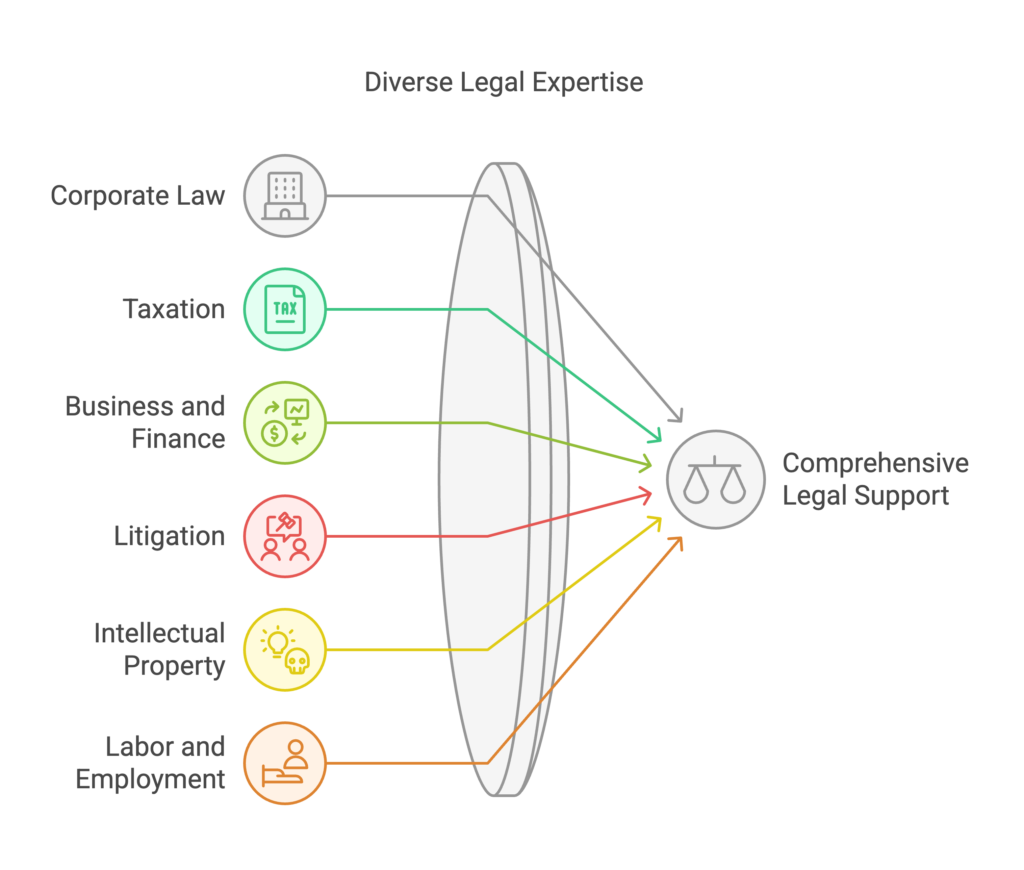
Legal services encompass a vast range of practice areas, including: ✅ Corporate law ✅ Taxation ✅ Business and finance ✅ Litigation and dispute resolution ✅ Intellectual property (patents, copyrights, trademarks) ✅ Antitrust and competition law ✅ Labor and employment law ✅ Arbitration and mediation ✅ Property and real estate law ✅ Administrative and political law
Some law firms dominate these fields more than others, often achieving global recognition for their expertise, financial strength, and extensive legal teams. The biggest law firms are frequently ranked using a variety of metrics, similar to university rankings.
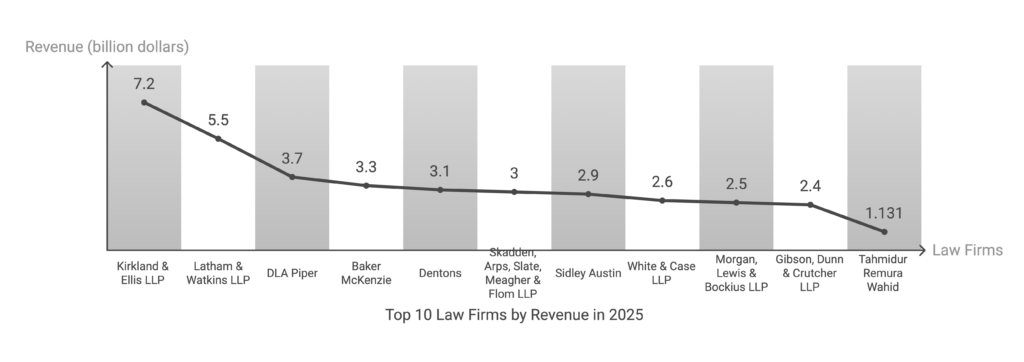
According to recent data from The Global 200 rankings (2025) by Law.com, the top 10 law firms in the world, based on annual revenue and size, are:
📌 While Kirkland & Ellis tops the list due to its revenue, does that automatically make it the best firm to work for? Not necessarily.
Most “top 10 law firm” lists rely on data such as revenue, lawyer headcount, and global presence. However, they often fail to consider factors like company culture, work-life balance, and the actual quality of legal services provided.
For aspiring legal professionals, ranking law firms based solely on revenue isn’t always the best approach. Instead, consider factors like:
✅ Expertise in Your Area of Interest – Does the firm specialize in the type of law you want to practice? ✅ Work Culture & Ethics – Does the firm foster a positive environment for lawyers? ✅ Innovation & Technology – Is the firm leveraging AI and legal tech to improve efficiency? ✅ Career Growth Opportunities – Are there clear pathways for promotions and specialization?
How to Rank Law Firms Effectively?
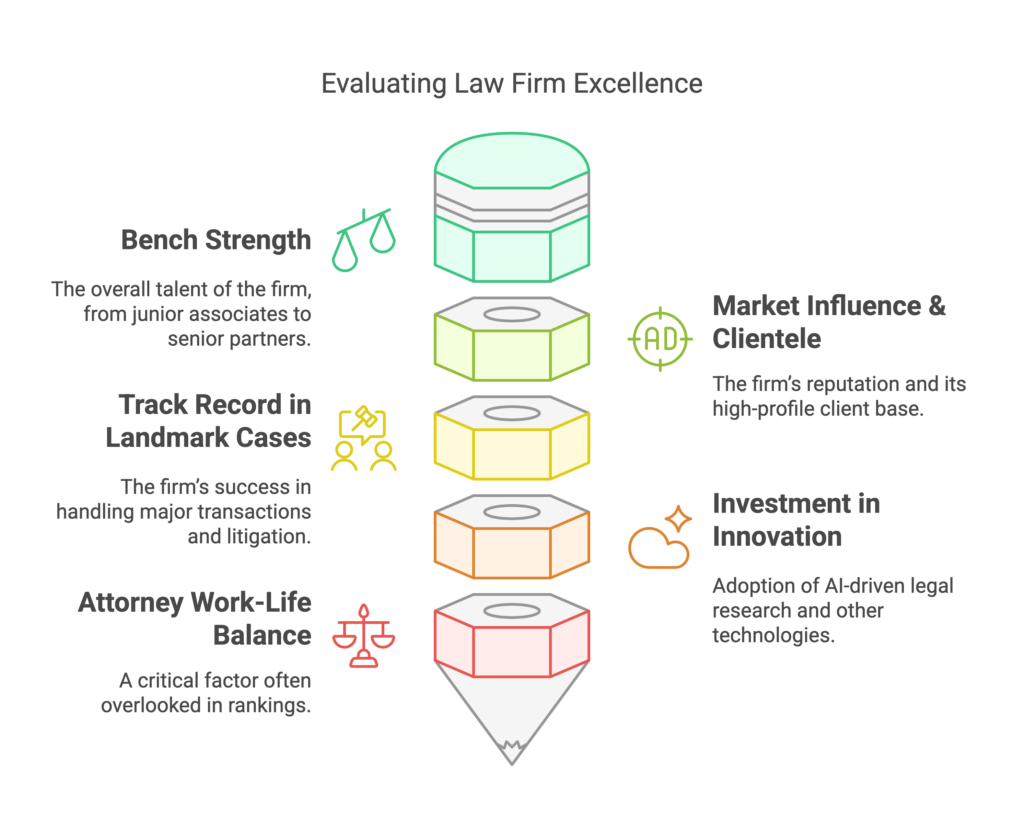
To determine whether a law firm is truly among the best, you should evaluate it based on:
🟢 Bench Strength – The overall talent of the firm, from junior associates to senior partners. 🟢 Market Influence & Clientele – The firm’s reputation and its high-profile client base. 🟢 Track Record in Landmark Cases – The firm’s success in handling major transactions and litigation. 🟢 Investment in Innovation – Whether the firm is adopting AI-driven legal research, automation, and other technologies. 🟢 Attorney Work-Life Balance – A critical factor often overlooked in rankings.
A law firm may dominate revenue charts but have poor employee satisfaction due to excessive working hours and unrealistic expectations. Thus, determining the best firm for you requires a holistic evaluation beyond just financial metrics.
Biggest Law Firms in the US (2025)
The United States remains home to some of the most powerful legal entities globally. The top law firms dominating the U.S. legal industry include:
⭐ Kirkland & Ellis LLP – Known for its dominance in corporate law, M&A, and private equity. ⭐ Latham & Watkins LLP – Recognized for its strong presence in finance, litigation, and regulatory matters. ⭐ Skadden, Arps, Slate, Meagher & Flom LLP – A prestigious firm handling high-profile cases in corporate law.
These firms generate billions in revenue and employ thousands of attorneys across their global offices.
Biggest Law Firms in Europe (2025)
While the U.S. legal market is massive, European law firms also play a critical role in global legal affairs. The European 100 ranking (2025) reveals that European law firms collectively generated over $2.8 billion in revenue last year.
Some of the most influential European law firms include:
These firms are heavily involved in corporate law, international arbitration, and finance law.
Should You Join a Big Law Firm?
📌 Joining a large law firm has pros and cons.
✔️ Advantages: ✅ High salaries & bonuses ✅ Prestige and networking opportunities ✅ Access to high-profile cases and clients ✅ Strong career progression
❌ Challenges: ⏳ Long working hours & high-pressure environment ⚖️ Less work-life balance 🏢 Less flexibility compared to smaller firms
For some lawyers, the prestige and resources of a large firm are worth it. For others, smaller and mid-sized firms offer better work-life balance and client relationships.
The Best Law Firms in 2025 According to TRW law firm
At IE Law School, we maintain strong relationships with top-tier law firms worldwide. Our Law Talent Fair attracts representatives from industry leaders, including:
✔️ Eversheds Sutherland ✔️ Baker McKenzie ✔️ Linklaters ✔️ Pinsent Masons ✔️ CMS ✔️ Hogan Lovells ✔️ White & Case ✔️ DLA Piper ✔️ Dentons ✔️ PwC & Deloitte Legal
With a global legal talent shortage affecting firms, this is the perfect time to pursue a career in law and secure a position at a top firm.
TRW Law Firm: On the Path to Becoming a Global Legal Powerhouse
Introduction
The legal industry is evolving rapidly, with globalization, technological advancements, and increasing complexities in regulatory frameworks shaping the future of law firms worldwide. In this dynamic environment, TRW Law Firm is emerging as a formidable force, redefining the benchmarks of legal excellence, innovation, and client service. With a strategic vision, a commitment to excellence, and a forward-thinking approach, TRW is on track to becoming one of the leading global law firms in the world.
TRW’s Foundation of Excellence
Commitment to Legal Expertise and Client-Centric Solutions
At the core of TRW Law Firm’s success is its deep-rooted commitment to providing highly specialized legal services across diverse practice areas. From corporate law and litigation to international arbitration and intellectual property, TRW’s team of expert attorneys ensures that every case is handled with precision and dedication.
What sets TRW apart is its client-first philosophy, prioritizing tailor-made legal solutions that cater to the specific needs of individuals, businesses, and multinational corporations. By integrating legal strategy with commercial acumen, TRW ensures that clients receive legal counsel that is not only legally sound but also commercially viable.
Global Reach and Local Expertise
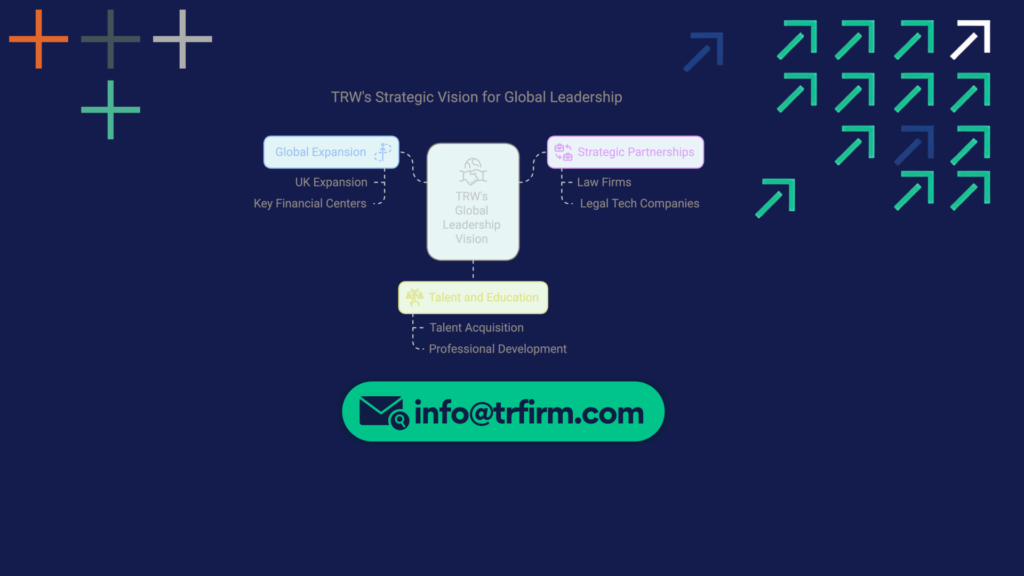
As globalization reshapes industries, TRW Law Firm has successfully expanded its international footprint, establishing itself as a go-to firm for clients requiring cross-border legal assistance. With offices strategically located in Dhaka, Dubai, and soon in the UK, TRW is well-positioned to serve clients navigating complex legal landscapes in multiple jurisdictions.
TRW’s approach combines global outreach with local expertise, ensuring that clients receive comprehensive legal support that aligns with regional regulations, business customs, and cultural sensitivities. This dual expertise allows TRW to handle international transactions, regulatory compliance, and litigation with unparalleled efficiency.
Leveraging Technology for Legal Innovation
TRW’s Commitment to Technological Advancement
The future of the legal industry lies in technological integration, and TRW Law Firm is leading the way in adopting cutting-edge legal tech solutions. Recognizing the impact of artificial intelligence (AI), blockchain, and automation, TRW is investing heavily in legal innovation to enhance its service offerings.
Some key technological initiatives at TRW include:
AI-Powered Legal Research: Utilizing advanced AI algorithms to conduct legal research, analyze precedents, and streamline case preparation.
Blockchain for Secure Transactions: Implementing blockchain technology to ensure security and transparency in contract management and financial transactions.
Virtual Legal Assistance: Providing clients with 24/7 virtual legal consultations, ensuring accessibility and convenience.
Cloud-Based Legal Management: Enhancing collaboration and case management through cloud computing, allowing for seamless communication across global offices.
By integrating technology into its legal practice, TRW is setting itself apart as a firm that embraces innovation, ensuring efficiency, accuracy, and superior service delivery.
Expansion into Key Practice Areas
Corporate and Commercial Law
With businesses increasingly facing regulatory complexities and cross-border challenges, TRW’s corporate and commercial law division is experiencing rapid growth. The firm assists corporations in mergers and acquisitions (M&A), contract negotiations, corporate governance, and compliance with international trade laws.
TRW’s expertise in corporate law has made it the trusted legal partner for businesses ranging from startups to multinational enterprises, helping them navigate legal risks and optimize their operations.
International Arbitration and Dispute Resolution
As businesses expand globally, legal disputes spanning multiple jurisdictions have become more common. TRW’s International Arbitration and Dispute Resolution team is recognized for its ability to handle complex cross-border disputes efficiently.
The firm’s expertise in international arbitration, mediation, and litigation enables it to represent clients before leading arbitration institutions, including:
The International Chamber of Commerce (ICC)
The London Court of International Arbitration (LCIA)
The Dubai International Financial Centre (DIFC)
By providing robust dispute resolution strategies, TRW is solidifying its position as a preferred legal partner for multinational corporations.
Banking, Finance, and Investment Advisory
TRW has established itself as a leading firm in banking, finance, and investment law, advising financial institutions, investors, and corporations on regulatory compliance, risk management, and structured finance transactions.
With financial regulations constantly evolving, TRW ensures that its clients stay ahead of regulatory requirements while optimizing their financial strategies. Its legal advisory services extend to Islamic finance, fintech regulations, and cross-border investment strategies.
Intellectual Property and Technology Law
As innovation drives business growth, protecting intellectual property (IP) has become more critical than ever. TRW’s Intellectual Property and Technology Law division is dedicated to safeguarding the rights of inventors, startups, and tech companies.
From patent filings and trademark protection to handling cyber law disputes, TRW’s legal team ensures that clients’ intellectual assets are secure, reinforcing the firm’s reputation as a legal leader in the tech industry.
TRW’s Ethical and Sustainable Legal Practice
Commitment to Social Responsibility and Pro Bono Work
Beyond commercial success, TRW Law Firm is committed to corporate social responsibility (CSR) and pro bono legal services. The firm actively supports underprivileged communities by providing free legal assistance, particularly in areas such as human rights, environmental law, and labor rights.
TRW’s dedication to ethical legal practice extends to its internal culture, where diversity, inclusion, and equal opportunity form the foundation of its work environment. By fostering a culture of social responsibility, TRW is not just building a law firm but a legacy of justice and fairness.
Sustainability and Environmental Legal Advocacy
Recognizing the growing impact of environmental regulations on businesses, TRW has developed a strong practice in environmental and sustainability law. The firm advises clients on environmental compliance, sustainable business practices, and climate change litigation.
By advocating for eco-friendly legal solutions, TRW is aligning itself with global sustainability goals, positioning the firm as a leader in responsible legal advisory services.
The Road Ahead: TRW’s Vision for Global Leadership
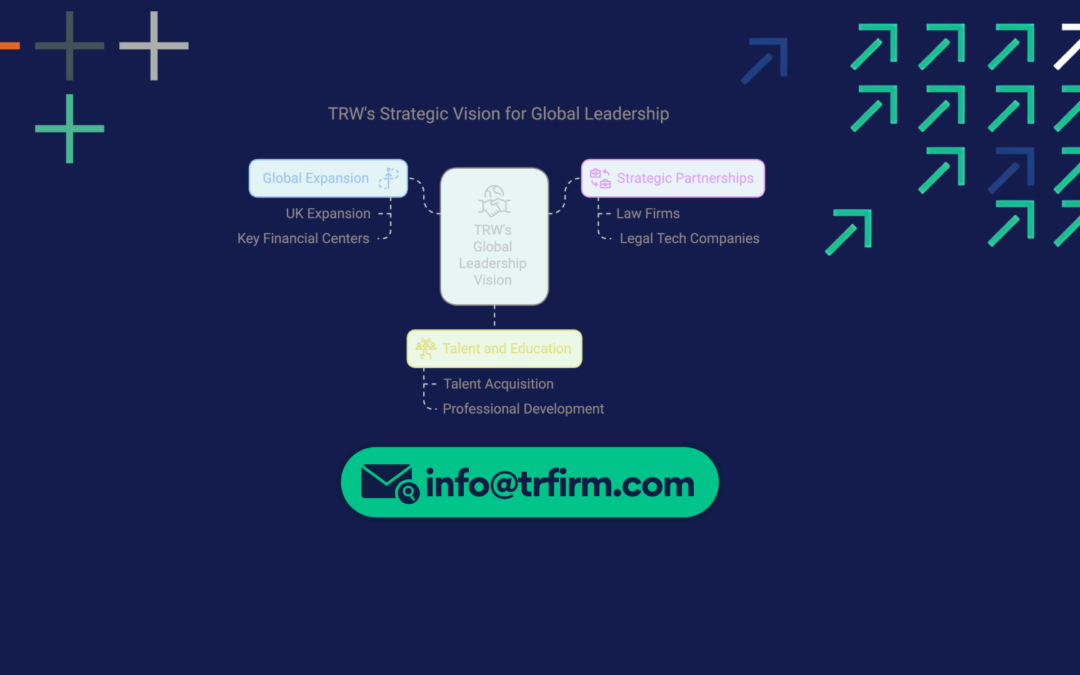
Expansion into the UK and Beyond
One of TRW’s most ambitious moves is its planned expansion into the United Kingdom, a strategic step that will place the firm at the heart of the global legal industry. With London being a leading hub for international finance, arbitration, and corporate law, TRW’s presence in the UK will enhance its global reach and reputation.
Beyond the UK, TRW aims to establish offices in other key financial and legal centers, including Singapore, New York, and Hong Kong. This global expansion strategy underscores TRW’s vision of becoming a truly international law firm that caters to clients across multiple jurisdictions.
Strengthening Strategic Partnerships
To accelerate its growth, TRW is forging strategic partnerships with global law firms, legal tech companies, and corporate clients. These collaborations are designed to enhance TRW’s service offerings, expand its knowledge base, and provide clients with comprehensive, cross-border legal solutions.
Investing in Talent and Legal Education
A law firm is only as strong as its people. TRW recognizes this and is heavily investing in talent acquisition and professional development. The firm collaborates with top law schools and institutions to recruit the brightest legal minds, ensuring continuous growth and innovation.
Moreover, TRW’s internal training programs and mentorship initiatives empower young lawyers with the skills and knowledge needed to excel in the global legal arena.
As TRW Law Firm continues its journey towards becoming a global legal powerhouse, its unwavering commitment to excellence, innovation, and ethical practice positions it among the top emerging law firms in the world. With strategic global expansion, investment in technology, and an exceptional legal team, TRW is not just keeping pace with the evolution of the legal industry—it is shaping its future.
The world of law is changing, and TRW Law Firm is leading the charge. The firm’s ascent to the pinnacle of global legal services is not a matter of “if”—but “when”.
The biggest law firms in the world offer prestige, lucrative salaries, and career-defining opportunities. However, whether you should aim for a large law firm or a smaller boutique practice depends on your career goals, values, and lifestyle preferences.
🔹 Research firms thoroughly before making career decisions. 🔹 Assess their culture, innovation, and career prospects. 🔹 Find a firm that aligns with your legal aspirations.
🚀 Are you ready to take the next step in your legal career? With the right guidance, the perfect law firm for you is within reach.
This version improves readability, depth, and engagement while making the article more informative and structured. Let me know if you’d like any additional refinements! 🚀
A Proven Track Record of Excellence in the UAE Legal Market
TRW Law Firm has a distinguished reputation in the United Arab Emirates (UAE) for delivering cutting-edge legal solutions for domestic, regional, and international clients. With a team of over 80 highly skilled lawyers, we provide comprehensive legal services across multiple industries, including finance, energy, infrastructure, corporate governance, and dispute resolution. Our legal experts bring a unique blend of local expertise and international experience, enabling us to handle complex transactions with precision and efficiency.
Decades of Expertise and Regional Presence
Our firm has been actively advising clients in the UAE for over four decades, significantly longer than many international law firms operating in the region. Unlike firms that rely on fly-in, fly-out legal services, TRW Law Firm maintains a strong in-region presence with dedicated offices in Abu Dhabi and Dubai. This allows us to provide real-time, on-the-ground legal support tailored to the nuances of UAE law and business practices.
What sets TRW Law Firm apart is our in-house Arabic capability and our ability to advise on both English and UAE law. Our multilingual team ensures seamless communication and compliance with local regulatory requirements, offering clients a competitive advantage in navigating the region’s legal landscape.
A Strong, Specialized Team for Complex Transactions
With a robust presence in the Middle East, our UAE team collaborates closely with TRW Law Firm’s extensive network of legal professionals across the region. This synergy enables us to rapidly assemble cross-border teams for intricate legal matters involving domestic, regional, and global transactions. Our expertise spans across multiple sectors, including:
Banking and Finance
Corporate and M&A
Real Estate and Construction
Energy and Infrastructure
Islamic Finance and Sukuk Issuances
Regulatory and Compliance
Arbitration and Dispute Resolution
We have earned the trust of financial institutions, multinational corporations, and government entities by consistently delivering outstanding legal services in high-stakes deals.
Recent High-Profile Transactions Handled by TRW Law Firm
As a leader in the UAE legal market, TRW Law Firm has successfully advised on numerous landmark deals. Our recent work includes:
1. Advising Binghatti on Its Debut Sukuk Issuance
In February 2024, TRW Law Firm advised Binghatti Holding Limited, a prominent Dubai-based property developer, on its inaugural sukuk issuance. The US$300 million trust certificates, due in 2027, marked Binghatti’s entry into the international debt capital markets. The issuance was notably oversubscribed, with the order book peaking at US$621 million, reflecting strong investor confidence. This sukuk was also significant as it was the first real estate sukuk issuance from the MENA region in 2024.
2. Representing Lenders in Masdar’s 1.8GW Sixth Phase of the Mohammed Bin Rashid Al Maktoum Solar Park
TRW Law Firm played a pivotal role in representing a consortium of lenders for Masdar’s ambitious 1.8 gigawatt (GW) sixth phase of the Mohammed Bin Rashid Al Maktoum Solar Park in Dubai. Achieving financial close in February 2024, this phase is set to provide clean energy to approximately 540,000 residences and reduce carbon emissions by around 2.36 million tonnes annually. The project, valued at AED 5.5 billion (US$1.5 billion), underscores Dubai’s commitment to sustainable energy solutions.
3. Acting for Saudi Electricity Company on the Dual-Series International Issuance of US$2.2 Billion Trust Certificates
In a landmark transaction, TRW Law Firm represented the Saudi Electricity Company (SEC) in the dual-series international issuance of US$2.2 billion trust certificates under its US$6 billion Sukuk Programme. This strategic move was aimed at refinancing existing debt and funding SEC’s ongoing projects, reflecting the company’s robust financial strategy and commitment to enhancing Saudi Arabia’s energy infrastructure.
4. Advising Kuwait Finance House K.S.C.P. on the US$1 Billion Senior Unsecured Trust Certificates Issuance
TRW Law Firm provided legal counsel to Kuwait Finance House (KFH) on its inaugural issuance of US$1 billion senior unsecured trust certificates. This issuance, under KFH’s US$4 billion Trust Certificate Issuance Programme, was a significant milestone, enhancing KFH’s capital base and supporting its expansion plans in the Islamic finance sector.
5. Assisting the Islamic Corporation for the Development of the Private Sector with US$600 Million Sukuk Issues
TRW Law Firm assisted the Islamic Corporation for the Development of the Private Sector (ICD) in issuing US$600 million sukuk. These funds are designated to support private sector development projects across member countries, aligning with ICD’s mission to promote economic growth and financial inclusion through Sharia-compliant financing solutions.
6. Representing a Consortium on the SalalaH2 Green Hydrogen and Ammonia Project in Oman
TRW Law Firm represented a consortium of international investors in the SalalaH2 project, a pioneering green hydrogen and ammonia production facility in Oman. This large-scale project aims to harness renewable energy sources to produce green hydrogen, positioning Oman as a key player in the global green energy market and contributing to the diversification of its economy.
7. Advising Saudi Tadawul Group on Its Strategic Acquisition of a 32.6% Stake in Dubai Mercantile Exchange (DME)
In a strategic move to expand its regional footprint, TRW Law Firm advised the Saudi Tadawul Group on acquiring a 32.6% stake in the Dubai Mercantile Exchange (DME). This acquisition is poised to enhance cross-border trading opportunities and strengthen the energy futures market in the region, reflecting the Group’s commitment to diversifying its investment portfolio.
8. Handling MBC GROUP’s IPO and Listing on the Saudi Exchange (Tadawul)
TRW Law Firm played a crucial role in MBC GROUP’s initial public offering (IPO) and subsequent listing on the Saudi Exchange (Tadawul). As the largest media company in the Middle East, MBC’s IPO attracted significant investor interest, marking a milestone in the region’s media industry and providing a platform for future growth and innovation.
9. Assisting Lenders in the 500MW Manah Solar Independent Power Project (IPP) in Oman
TRW Law Firm assisted a consortium of lenders in financing the 500 megawatt (MW) Manah Solar Independent Power Project in Oman. This project is part of Oman’s strategic initiative to diversify its energy mix by incorporating renewable energy sources, thereby reducing reliance on fossil fuels and promoting environmental sustainability.
10. Advising the Moopen Family on Aster DM Healthcare’s Strategic Restructuring and US$1 Billion Gulf Business Sale
TRW Law Firm provided comprehensive legal advice to the Moopen Family during Aster DM Healthcare’s strategic restructuring, culminating in the sale of its Gulf business for US$1 billion. This transaction was pivotal in streamlining the company’s operations and focusing on core markets, thereby enhancing its competitive position in the healthcare sector.
11. Representing Dubai Taxi Company in Its IPO and Listing on the Dubai Financial Market (DFM)
TRW Law Firm represented Dubai Taxi Company in its initial public offering (IPO) and listing on the Dubai Financial Market (DFM). This move aimed to raise capital for expansion plans and modernize the company’s fleet, aligning with Dubai’s vision for enhanced urban mobility and smart city initiatives.
12. Handling Investcorp Capital’s US$451 Million IPO and Listing on the Abu Dhabi Securities Exchange
TRW Law Firm managed Investcorp Capital’s US$451 million initial public offering (IPO) and subsequent listing on the Abu Dhabi Securities Exchange. This successful IPO reflects Investcorp’s robust investment strategy and positions the firm for further growth in the regional and international markets.
Why Clients Trust TRW Law Firm in the UAE
Our clients choose TRW Law Firm for our:
✔ Deep Regional Expertise – Over four decades of experience in the UAE legal landscape ✔ In-House Arabic Capability – Expertise in both English and UAE law ✔ Strong Market Presence – Over 80 full-time lawyers based in Abu Dhabi and Dubai ✔ Unmatched Transactional Experience – Successfully handling high-value and complex deals ✔ Client-Centric Approach – Personalized solutions tailored to each client’s needs
Contact Us
TRW Law Firm is committed to providing unparalleled legal services in the UAE and beyond. Whether you require legal assistance for corporate matters, finance, dispute resolution, or regulatory compliance, our team is ready to help.
Injunctions and Status Quo Litigation in Bangladesh: A Comprehensive Guide by TRW Law Firm
Introduction to Injunctions and Status Quo Orders in Bangladesh
In the legal landscape of Bangladesh, injunctions play a crucial role in preventing harm or preserving rights while a legal dispute is ongoing. Status quo litigation refers to cases where courts issue orders to maintain the current state of affairs between the parties until the final resolution of the matter. These legal remedies are essential in protecting the interests of individuals, businesses, and organizations involved in disputes related to property, contracts, intellectual property, and corporate conflicts.
As one of the leading law firms in Bangladesh, TRW Law Firm has extensive experience in handling injunction and status quo litigation, representing clients before the District Courts, High Court Division, and the Appellate Division of the Supreme Court of Bangladesh. This article provides an in-depth analysis of injunctions, status quo orders, their types, legal framework, procedures, enforcement, and real-life case studies.
Legal Framework for Injunctions in Bangladesh
The primary laws governing injunctions and status quo orders in Bangladesh include:
✅ The Code of Civil Procedure, 1908 (CPC) – Sections 94, 95, and 151 provide courts with the power to issue injunctions. Order XXXIX Rules 1 & 2 explicitly govern temporary injunctions. ✅ The Specific Relief Act, 1877 – Covers permanent injunctions and situations where specific relief can be granted. ✅ The Contract Act, 1872 – Relevant in cases involving breach of contracts where injunctions are necessary. ✅ The Transfer of Property Act, 1882 – Addresses injunctions in property disputes. ✅ The Companies Act, 1994 – Governs injunctions in corporate litigation, including shareholder disputes and boardroom conflicts. ✅ The Trademarks Act, 2009 & The Copyright Act, 2000 – Provide for injunctions in intellectual property disputes.
Types of Injunctions in Bangladesh
1️⃣ Temporary Injunctions
Temporary injunctions are granted before the final judgment to maintain the existing state of affairs and prevent irreparable harm.
When is a Temporary Injunction Granted?
✔ Prima Facie Case: The applicant must show a strong case in their favor. ✔ Irreparable Loss or Injury: Harm that cannot be compensated by damages. ✔ Balance of Convenience: The court considers which party would suffer more harm without an injunction.
Examples of Temporary Injunctions:
📌 Stopping unauthorized construction on disputed land. 📌 Preventing misuse of intellectual property. 📌 Restricting a company from transferring shares pending litigation.
2️⃣ Permanent Injunctions
A permanent injunction is issued as part of the final judgment when the plaintiff proves that monetary compensation is inadequate relief.
Common Cases for Permanent Injunctions:
📌 Restricting illegal encroachments on private property. 📌 Preventing breach of contract by a party. 📌 Stopping continuous infringement of a trademark.
3️⃣ Status Quo Orders
Status quo orders maintain the existing conditions between parties to prevent unilateral changes that could prejudice one party.
Common Examples of Status Quo Orders:
📌 Halting changes in company directorship during disputes. 📌 Freezing bank accounts in financial disputes. 📌 Preventing eviction in tenancy disputes until final resolution.
Procedure for Obtaining an Injunction in Bangladesh
Step 1: Filing an Application
The plaintiff must file a petition for an injunction in the relevant court, clearly stating: ✔ The grounds for injunction and potential harm. ✔ Supporting documents and affidavits. ✔ Legal provisions supporting the application.
Step 2: Court Hearing and Show-Cause Notice
The court may issue a show-cause notice to the opposing party and schedule a hearing.
Step 3: Interim Order (Ex-Parte Injunctions in Urgent Cases)
If the case is urgent, the court may grant an ex-parte injunction (without hearing the other party) to prevent irreparable harm.
Step 4: Opposing Party’s Response
The opposing party can challenge the injunction by filing a reply with evidence.
Step 5: Final Decision
After hearing both parties, the court grants or denies the injunction.
Consequences of Violating an Injunction
Violating an injunction is a serious legal offense in Bangladesh. Courts may impose: ✔ Contempt of court proceedings. ✔ Fines or imprisonment for non-compliance. ✔ Seizure of assets or property to enforce compliance. ✔ Cancellation of business licenses in corporate disputes.
Case Studies of Injunctions in Bangladesh
Case Study 1: Property Dispute Injunction
A landowner filed an injunction against an illegal encroachment by a real estate company. TRW Law Firm successfully secured an interim injunction, preventing construction on the disputed land until the matter was resolved in court.
Case Study 2: Corporate Litigation Injunction
A shareholder dispute arose regarding the appointment of directors in a private company. TRW Law Firm obtained a status quo order, preventing any changes in the company’s management structure until the High Court’s final verdict.
Case Study 3: Intellectual Property Dispute Injunction
A global brand faced trademark infringement in Bangladesh. TRW Law Firm filed an injunction, leading to a court order preventing further use of the infringing mark and compensating the client for damages.
Why Choose TRW Law Firm for Injunction Litigation?
🔹 Experienced Legal Team – Years of expertise in securing injunctions and handling litigation. 🔹 Rapid Legal Action – Immediate filing and representation in urgent cases. 🔹 Comprehensive Legal Support – Full-service approach covering corporate, civil, and IP injunctions. 🔹 Proven Track Record – Successful outcomes in complex injunction cases.
FAQs on Injunctions in Bangladesh
1. How long does it take to get an injunction in Bangladesh?
The timeline varies, but urgent ex-parte injunctions can be obtained within 24-72 hours, while standard injunctions take a few weeks to months.
2. Can an injunction be appealed?
Yes. An aggrieved party can file an appeal to the High Court Division challenging the injunction order.
3. Can an injunction be modified or vacated?
Yes. If circumstances change, the affected party can file a motion to modify or vacate the injunction.
4. What are the costs of filing for an injunction?
Costs depend on court fees, legal representation, and case complexity. TRW Law Firm provides competitive pricing for clients seeking injunctions.
Contact TRW Law Firm for Injunction & Status Quo Litigation
Intellectual Property Claims in Bangladesh: A Comprehensive Guide by TRW Law Firm
Introduction to Intellectual Property (IP) in Bangladesh
Intellectual Property (IP) refers to the legal rights granted to individuals and businesses over their creations and inventions. These rights provide protection against unauthorized use and infringement, ensuring that innovators, artists, and businesses benefit from their intellectual efforts. Bangladesh has a growing economy with increasing recognition of the importance of intellectual property rights (IPRs). The legal framework governing IP in Bangladesh includes laws on trademarks, copyrights, patents, industrial designs, and trade secrets.
As one of the leading law firms in Bangladesh, TRW Law Firm has extensive expertise in handling intellectual property claims involving enforcement, registration, disputes, and litigation. This article provides a detailed overview of IP laws in Bangladesh, the procedures for making claims, the enforcement mechanisms, and how TRW Law Firm can assist businesses and individuals in protecting their IP assets.
Intellectual Property Laws and Regulatory Framework in Bangladesh
Bangladesh is a signatory to multiple international conventions on intellectual property, including the World Intellectual Property Organization (WIPO) and the Trade-Related Aspects of Intellectual Property Rights (TRIPS) Agreement under the World Trade Organization (WTO). The primary legislation governing IP rights in Bangladesh includes:
✅ The Trademarks Act, 2009 – Governs the registration and protection of trademarks. ✅ The Copyright Act, 2000 – Protects literary, artistic, and creative works. ✅ The Patents and Designs Act, 1911 – Regulates patents and industrial designs. ✅ The Geographical Indications of Goods (Registration and Protection) Act, 2013 – Safeguards geographical indications (GIs). ✅ The Trade Secrets Protection Act (Proposed) – Expected to introduce stronger protection for confidential business information.
The Department of Patents, Designs, and Trademarks (DPDT) under the Ministry of Industries is the key regulatory body responsible for administering IP rights in Bangladesh.
1. Trademark Claims in Bangladesh
1.1 What is a Trademark?
A trademark is a unique symbol, word, phrase, or design that distinguishes a business’s goods or services from competitors. In Bangladesh, trademarks must be registered with the DPDT to ensure legal protection.
1.2 Filing a Trademark Claim
A trademark claim may be filed in Bangladesh under the following circumstances: ✔ Trademark Infringement – Unauthorized use of a registered trademark. ✔ Passing Off – Misrepresentation of goods/services as those of another business. ✔ Opposition to Registration – Challenging a trademark application before it is granted. ✔ Dilution Claims – Unauthorized use that weakens the distinctiveness of a well-known trademark.
Procedure for Filing a Trademark Claim:
Filing a complaint with the DPDT or initiating a civil lawsuit in court.
Issuing cease and desist notices to infringers.
Seeking injunctive relief to stop unauthorized use.
Claiming damages for financial losses incurred due to infringement.
1.3 How TRW Law Firm Can Help with Trademark Disputes
TRW Law Firm provides comprehensive legal support for trademark disputes, including: ✅ Conducting trademark searches and ensuring proper registration. ✅ Handling trademark opposition and responding to objections. ✅ Representing clients in trademark litigation before the High Court. ✅ Assisting with customs enforcement to prevent counterfeit goods.
2. Copyright Claims in Bangladesh
2.1 What is Copyright Protection?
Copyright protects original works of authorship, including books, music, films, software, and artistic works. Registration is not mandatory in Bangladesh for copyright protection, but it serves as evidence in disputes.
2.2 Filing a Copyright Claim
A copyright claim can be filed under the following conditions: ✔ Unauthorized reproduction, distribution, or performance of a copyrighted work. ✔ Plagiarism or copying of written, visual, or audio content. ✔ Digital copyright infringement, including piracy and software counterfeiting.
Procedure for Filing a Copyright Claim:
Sending a legal notice to the infringer.
Filing a civil or criminal lawsuit under the Copyright Act, 2000.
Seeking injunctive relief to stop further infringement.
Claiming damages for financial losses.
2.3 How TRW Law Firm Can Assist
TRW Law Firm offers expert legal services in copyright protection: ✅ Handling copyright registration and litigation. ✅ Representing clients in copyright infringement cases. ✅ Enforcing digital copyright laws and addressing online piracy.
3. Patent and Industrial Design Claims
3.1 Patent Protection in Bangladesh
A patent provides an inventor with exclusive rights to their invention for a period of 20 years. The Patents and Designs Act, 1911 governs patent protection.
3.2 Filing a Patent Claim
Patent claims arise in cases of: ✔ Patent Infringement – Unauthorized manufacturing or selling of a patented invention. ✔ Patent Ownership Disputes – Conflicts regarding inventorship or rights. ✔ Invalidation Actions – Challenging the validity of a granted patent.
Procedure for Filing a Patent Claim:
Filing a complaint with the DPDT.
Initiating legal action in the High Court Division.
Requesting injunctions and damages for infringement.
3.3 How TRW Law Firm Can Help with Patent Cases
TRW Law Firm offers services in: ✅ Patent registration and prosecution. ✅ Patent litigation and dispute resolution. ✅ Advisory services on patent licensing and technology transfers.
4. Trade Secret Protection in Bangladesh
4.1 What Are Trade Secrets?
Trade secrets include confidential business information, such as formulas, processes, and strategies.
4.2 How to Protect Trade Secrets
Since Bangladesh lacks specific trade secret legislation, businesses must rely on contractual agreements for protection.
✔ NDAs (Non-Disclosure Agreements) for employees and partners. ✔ Confidentiality Clauses in commercial contracts. ✔ Legal action for misappropriation of trade secrets under existing laws.
4.3 How TRW Law Firm Can Assist with Trade Secret Protection
✅ Drafting NDAs and confidentiality agreements. ✅ Advising on corporate policies to safeguard trade secrets. ✅ Handling trade secret litigation and misappropriation claims.
Conclusion: Protect Your IP Rights with TRW Law Firm
IP protection is essential for businesses and innovators in Bangladesh. TRW Law Firm provides expert legal services for intellectual property claims, including trademark disputes, copyright protection, patent litigation, and trade secret enforcement. If you require legal assistance in protecting your intellectual property, contact TRW Law Firm today.
Trade Mark Laws and Regulations Bangladesh in 2025
1. Relevant Authorities and Legislation
1.1 What is the relevant trade mark authority in Bangladesh?
The Department of Patents, Designs, and Trademarks (DPDT) under the Ministry of Industries is the primary authority responsible for trademark registration and enforcement in Bangladesh. It oversees all trademark applications, disputes, and regulatory matters, ensuring compliance with national and international intellectual property (IP) standards.
1.2 What is the relevant trade mark legislation in Bangladesh?
The Trademarks Act, 2009, along with the Trademarks Rules, governs the trademark system in Bangladesh. This legislation provides the framework for the registration, opposition, enforcement, and protection of trademarks. Additionally, the Bangladesh Penal Code, The Special Powers Act, 1974, and The Copyright Act, 2000 may also be relevant in certain trademark disputes involving fraud, counterfeiting, or unfair competition.
2. Application for a Trade Mark
2.1 What can be registered as a trade mark?
A mark that can be graphically represented and is capable of distinguishing the goods or services of one entity from another can be registered. This includes: ✅ Words, logos, symbols, slogans, and signatures ✅ Shapes, packaging, colors, and combinations thereof ✅ Sound marks with graphical representation ✅ Motion marks (dynamic marks involving movement) ✅ Holograms and multimedia marks
2.2 What cannot be registered as a trade mark?
The following marks are prohibited from registration: ❌ Generic terms lacking distinctiveness ❌ Descriptive marks directly referring to the quality, type, or origin of goods/services ❌ Marks that are deceptive, offensive, or contrary to public morality ❌ Marks that resemble existing well-known trademarks ❌ Marks prohibited under the Emblems and Names (Prevention of Improper Use) Act, 1950 ❌ Marks that are primarily surnames or geographical names ❌ Marks containing national symbols, flags, or insignia without authorization
2.3 What information is needed to register a trade mark?
The following details are required for trademark registration: ✅ Exact representation of the mark ✅ Name, address, and legal status of the applicant ✅ Description of goods/services based on Nice Classification ✅ Priority details (if applicable) ✅ First use date in Bangladesh (if applicable) ✅ Power of Attorney if filed through an agent ✅ A statement of distinctiveness for marks that may require further justification
2.4 What is the general procedure for trade mark registration?
Filing of application – Submit an application with DPDT.
Examination – DPDT reviews the application for absolute and relative grounds of refusal.
Publication – If approved, the trademark is published for opposition in the Trademarks Journal.
Opposition Period – Third parties have two months to file oppositions.
Registration – If no opposition is raised, the trademark is registered, valid for ten years.
2.5 How is a trade mark adequately represented?
A trademark must be represented graphically and in high resolution for accurate publication and recognition. Sound marks require submission of an MP3 file and a graphical representation (such as a musical notation).
2.6 How are goods and services described?
Goods and services are classified according to the Nice Classification, which divides them into 45 classes (34 for goods and 11 for services).
3. Opposition and Refusal of Trade Marks
3.1 What are the grounds for refusal of a trade mark?
A trade mark may be refused on absolute and relative grounds:
Absolute grounds: Lack of distinctiveness, descriptive nature, offensive content, or contradiction with public interest.
Relative grounds: Similarity with prior registered marks causing consumer confusion or unfair competition.
3.2 What is the procedure for opposing a trade mark?
Notice of Opposition: Filed within two months of the trademark’s publication.
Counterstatement: The applicant responds to opposition within two months.
Evidence Submission: Both parties submit evidence.
Hearing: Conducted before the DPDT for a final decision.
4. Enforcement of Trade Mark Rights
4.1 How can a trade mark be enforced?
A trademark owner can enforce rights through: ✅ Civil proceedings: Filing an infringement or passing-off suit in courts. ✅ Criminal proceedings: In severe cases, criminal complaints can be lodged for counterfeiting. ✅ Customs enforcement: Requesting border control measures to stop counterfeit imports. ✅ Administrative actions: Complaints with regulatory authorities like the Bangladesh Competition Commission.
4.2 What remedies are available for trade mark infringement?
✔️ Injunctions: Stopping unauthorized use immediately ✔️ Damages: Compensation for financial losses ✔️ Seizure of counterfeit goods ✔️ Destruction of infringing products ✔️ Account of profits: Recovering the profits earned from the infringement
4.3 Can a trade mark be revoked?
Yes, trademarks can be revoked for non-use over five consecutive years, misleading registration, or fraud.
5. FAQs on Trade Mark Cases in Bangladesh
5.1 How long does it take to register a trade mark in Bangladesh?
The process takes 12-18 months, provided there are no objections or oppositions.
5.2 Can foreign companies register a trade mark in Bangladesh?
Yes, foreign companies can register trademarks, but they must appoint a local agent.
5.3 What happens if my trade mark is opposed?
You will need to submit counterarguments and attend a hearing. If successful, your mark proceeds to registration.
5.4 What are the costs of trade mark registration in Bangladesh?
Fees vary based on classes and legal assistance but generally range from BDT 10,000 to 30,000.
6. Summary Table of Key Information
Aspect
Details
Governing Law
Trademarks Act, 2009
Authority
DPDT, Ministry of Industries
Validity
10 years, renewable
Grounds for Refusal
Lack of distinctiveness, similarity to existing marks
Opposition Window
2 months from publication
Common Remedies
Injunctions, damages, product seizure
7. How TRW Law Firm Can Assist
✅ Trademark Registration: Filing, managing, and expediting registration. ✅ Trademark Enforcement: Handling infringement lawsuits and opposition cases. ✅ Trademark Monitoring: Protecting against unauthorized registrations. ✅ International Filings: Assisting foreign businesses with Bangladesh trademark laws.